

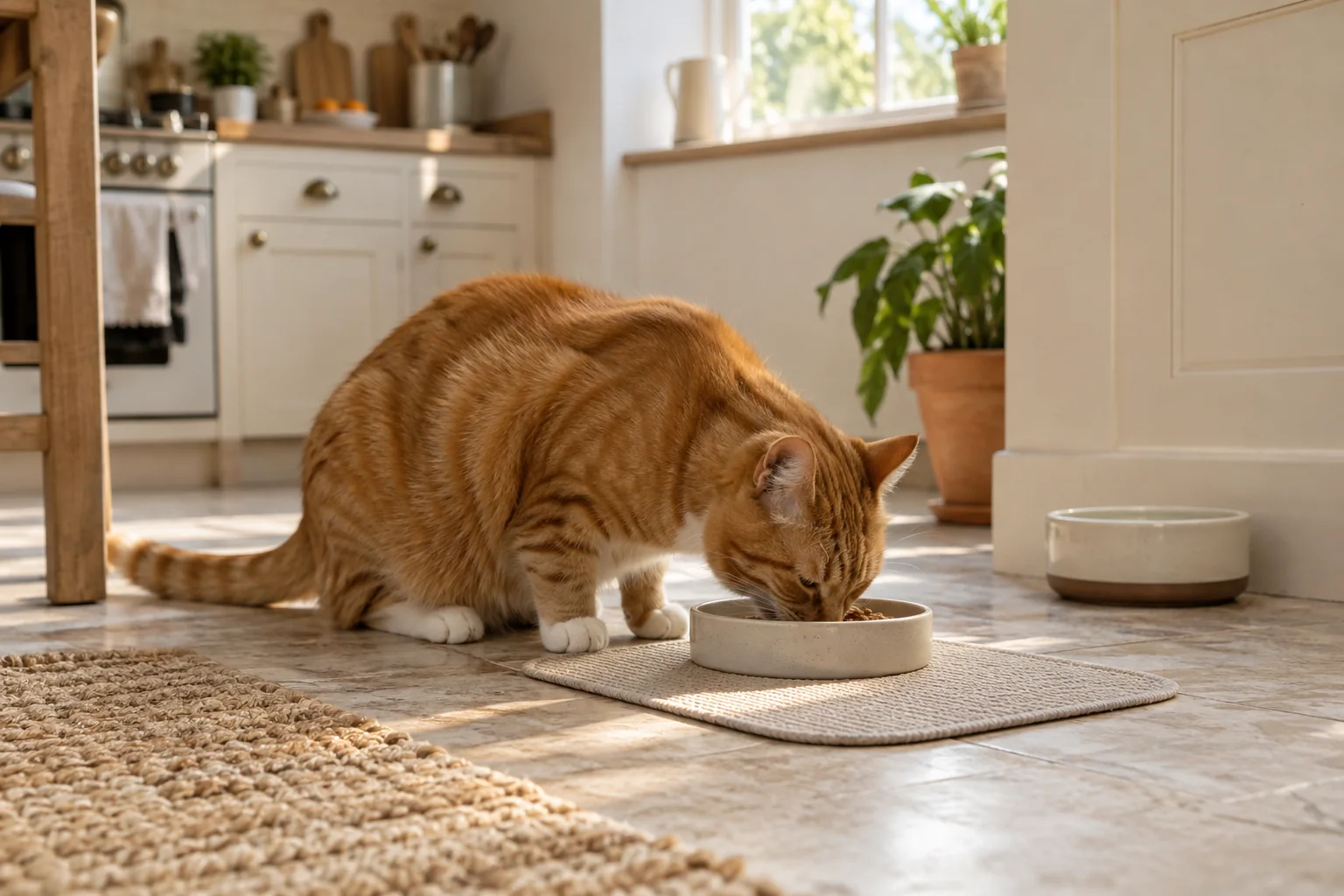
A timed feeder, a dry-food dispenser and a microchip feeder are different tools. Start by deciding what needs to happen: a portion becoming available later, dry food being dispensed or one cat having access to a bowl.
A wet meal later in the day
Wet food needs a feeder designed to hold it. A conventional dry-kibble hopper is not a substitute. Compare the number of future openings, how the food is cooled and how thoroughly you can clean the tray and lid.
The wet-food feeder buying guide compares the Cat Mate C200 and C500, with a separate explanation of when the standard SureFeed belongs in the decision. It covers the important difference between timer range and food-storage time.
Cat Mate C200 two-meal feeder
Best for: One or two later meals
Two lidded compartments with separate dial timers. Choose this simpler layout when you only need one or two later servings, rather than a full rotating tray.
What stands out
- Separate timers for each compartment
- Removable lids and bowls
Keep in mind
- Only two compartments
- 48-hour timer range is not a food-storage promise
- Two timed lids
- One supplied ice pack
- 1 × AA battery
If you need more future openings, the C500 adds four timed servings after the initially open portion. Its digital schedule and larger rotating tray make sense only if you will use that extra flexibility.
Cat Mate C500 five-meal feeder
Best for: Several timed servings
A rotating tray with one compartment open initially and four scheduled openings. A sensible starting point when you want several pre-portioned meals without an app.
What stands out
- More scheduled openings than the C200
- Removable dishwasher-safe lid and tray
Keep in mind
- Ice packs require preparation
- All cats can reach the open compartment
- Four timed openings
- Two supplied ice packs
- 3 × AA batteries
Dry food from a hopper
Check the manufacturer's supported kibble dimensions, portion settings and power arrangements. A portion setting expressed as a unit count may not tell you the food's weight; measure the output using the food you actually feed before relying on it.
An app adds its own questions. Which functions need a connection? Are schedules stored on the device? What happens after a power interruption? Read the exact model's instructions rather than assuming every smart feeder works the same way.
Individual access
If another pet eats from the bowl, a microchip-controlled lid addresses access. The standard SureFeed opens for registered identities; it does not schedule later meals. Introduce the lid gradually and check the complete opening fits the cat comfortably.
For multiple cats, look at the feeding locations as well as the device. Cats Protection's guidance on introducing cats recommends distributing resources so cats are not forced into competition.
SureFeed Microchip Pet Feeder
Best for: Individual access, rather than timing
The lid responds to a registered cat’s microchip or compatible tag. It belongs on your shortlist if another pet steals food, but it does not release meals at scheduled times.
What stands out
- Access tied to registered identities
- Gradual lid-training mode
Keep in mind
- Does not schedule meals
- Rear access may need an additional cover
- Wet or dry food
- 400ml bowl
- 4 × C batteries
The everyday bowl still matters
Compare the usable bowl dimensions, stability and washing instructions. A spare bowl can make cleaning easier, but replacement compatibility matters. Check whether a model's stainless-steel insert replaces or sits inside its original bowl.
A feeder is equipment for a care routine, not a reason to leave a cat without human checks. Food storage instructions still apply, and a change in eating habits needs a vet's advice rather than a different gadget.
Choose the feeder by food and control
For stored wet meals, start with wet-food cat feeders. For kibble delivered from a hopper, compare dry-food automatic feeders. The feeders without Wi-Fi guide focuses on physical controls, connection requirements and the schedules you can manage on the device.
Use microchip feeders when the job is controlling which registered cat can reach a meal. The timed versus microchip comparison explains why access control does not itself create future meals. For ordinary served meals, wide, shallow bowls and feeding mats address food access and floor cleaning without adding a mechanism.
Practise the routine before relying on it
Follow introducing an automatic feeder while you can observe it. For hoppers, weigh actual portions using the current kibble. If a meal is missed, work through timing, power and blockage checks rather than repeatedly changing the schedule.
C500 owners have a separate programming guide with worked schedules. For ongoing ownership, use feeder cleaning, Cat Mate bowl and ice-pack compatibility or SureFeed Standard versus Connect accessories. Similar branding does not establish matching bowls, rear covers or cooling parts.
Read the guides
Find the next useful guide
Separate food type, meal timing and individual access before choosing a feeder or bowl.
Choosing, setup & care
Work through fit, everyday decisions and upkeep.
- Automatic cat feeder missed meals: timing, power and blockage checks Check a missed feeder meal by confirming food access, clock, enabled meals, power and supported blockage care. Separate a machine fault from a cat not eating.
- How to check automatic cat feeder portion sizes Weigh repeated dry-food servings, distinguish feeder units from grams and check the total daily allowance. Includes a worked example and a repeatable recording method.
- How to clean an automatic cat feeder Separate washable food-contact parts from the powered base, clean residue and dry before reassembly. Includes exact C500 care and a supervised restart checklist.
- How to introduce an automatic cat feeder Help your cat accept a new automatic feeder through familiar food, gradual sound exposure and supervised meals. Check actual intake, timing and a reliable fallback.
- How to set a Cat Mate C500 schedule Set the C500 clock and daily meal times with the correct controls. Follow worked examples, distinguish meal settings from tray compartments and test the next opening.
- Timed versus microchip cat feeders Compare timed food access with microchip identification. Choose around late meals, food stealing, separate diets and the limits of cooling and portion control.
Parts & compatibility
Match replacements to the exact equipment.
- Cat Mate feeder bowls and ice packs: model compatibility Match C100, C200 and C500 feeder bowls, steel inserts and ice packs using model references and supported part codes. Separate 402, 464, 947, 952 and ice-pack families.
- SureFeed bowls and rear covers: Standard versus Connect compatibility Compare SureFeed full bowls, split bowls, Connect half bowls and rear covers. Match the accessory to the Standard or Connect feeder before changing the setup.
Frequently asked questions
What is the difference between timed and microchip feeders?
A timed feeder makes a meal available according to its controls. A microchip feeder recognises registered identities and controls access to a bowl. The standard SureFeed does not schedule future meals. Decide whether timing, access or both is the actual household problem.
Can a dry-food hopper dispense wet food?
Use only food supported by the exact manufacturer instructions. A conventional dry-kibble hopper is not a wet-food compartment feeder. Wet-food storage, cooling, cleaning and human checks remain separate requirements even when a timer can be set far into the future.
Do I need Wi-Fi for an automatic feeder?
Some feeders use local timers or buttons and need no home connection. Connected models differ in what they retain or permit offline. Check the exact model’s stored schedules, local controls and recovery after power loss rather than assuming all automatic feeders work alike.
How do I know what a portion setting weighs?
Measure repeated deliveries using the kibble you actually feed and suitable scales. Device units or motor rotations are not a universal gram measure. Recheck after a food change and use the resulting weight within your cat’s feeding plan rather than treating the setting as dietary advice.
Will a replacement bowl fit any feeder from the same brand?
No. Match the precise feeder model and supported accessory code, including Standard versus Connect versions where relevant. A bowl that sits in an opening can still affect fit, weighing or closure. Follow the compatibility information for the exact feeder and replacement part.


