
Buying guide · Water fountains & bowls
Best cat water bowls
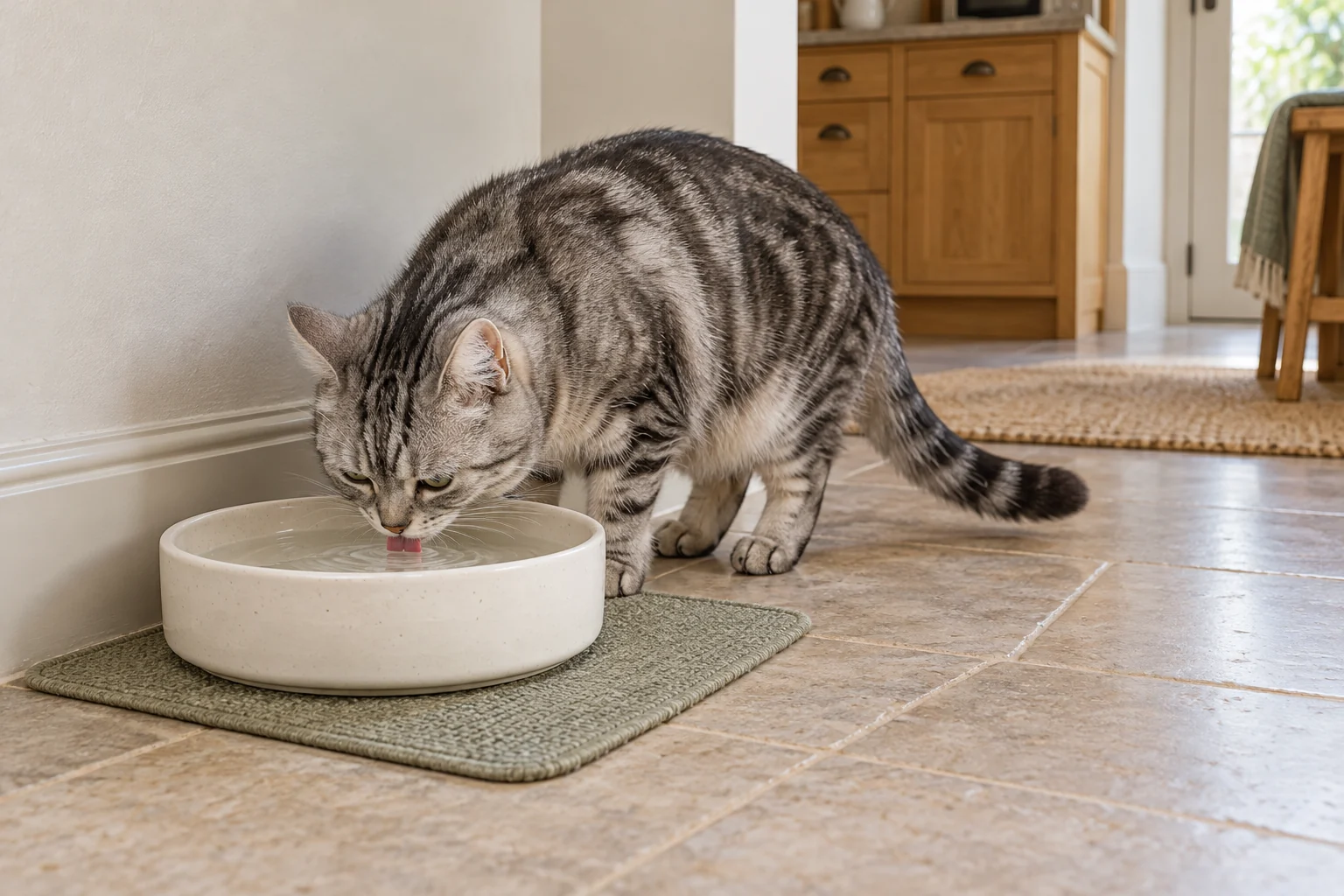
Compare three straightforward water bowls by width, depth, material and cleaning. Choose around your cat’s drinking position and your refill routine.
The short answer
Compare the rim, material and refill routine
Compare the Beco Steady cat bowl for a wide, low plastic shape with a grippy base, the Mason Cash Cane bowl for a deeper 400 ml stoneware option, and the Colour Mix saucer for a shallower 200 ml ceramic alternative. Choose the shape your cat can use comfortably and keep the drinking station separate from food and litter.
Compare the options
| Bowl | Listed shape or size | Material | Main compromise |
|---|---|---|---|
| Beco Steady cat | 17 × 17 × 3 cm exterior | Recycled plastic | Shallow water level needs checking |
| Mason Cash Cane | 13 cm; 400 ml | Stoneware | Deeper shape |
| Mason Cash Colour Mix saucer | 13 cm; 200 ml | Stoneware | Lower nominal capacity |
Start with the drinking position
The best cat water bowl is one your cat can approach and drink from comfortably, and that you can keep clean and topped up. A decorative bowl that is awkward to lift or placed in a busy doorway can be a worse practical choice than a simple dish in a calm location.
Look at the width of the opening, the height of the rim and the surface left when the bowl is at its normal fill level. Outside diameter alone does not describe how far a cat must lower its head. A broad saucer and a deeper bowl can have the same advertised diameter while offering a different drinking position.
These three options give you a useful comparison between a low plastic dish, a deeper stoneware bowl and a ceramic saucer. There is no claim that we have measured how much extra water a cat will drink from any of them. The choice should remain open to your cat's actual use.
Beco Steady: a wide, low dish with a grippy base
Beco Steady cat bowl, olive green
Best for: A shallow bowl with a non-slip base
A wide, shallow recycled-plastic dish with a grippy base and an easy-grip handle. Useful where a lower rim matters more than a deep reservoir.
What stands out
- Broad shallow shape
- Easy-grip handle for lifting
Keep in mind
- Inspect plastic for scratches and wear
- A shallow bowl needs attentive refilling
- 17 × 17 × 3 cm outer size
- Dishwasher safe
- Not microwave safe
The Beco Steady cat bowl has a listed exterior of 17 × 17 × 3 cm. Its broad, shallow shape and easy-grip handle make it a useful starting point when you want a lower rim rather than a deep reservoir. The grippy base is also relevant on a smooth floor where a lightweight dish might otherwise move.
Those are outside dimensions, including the overall shape. They do not establish the diameter of the water surface or a usable fill capacity. Check how much clear opening remains and make sure the bowl sits flat on the chosen floor or mat. A non-slip feature does not remove the need to test the placement.
The selected model is recycled plastic. Its brand listing permits dishwasher cleaning and says it is not microwave safe. Inspect the surface for scratches and replace the bowl when it becomes worn or damaged. Avoid transferring care directions from a different Beco material or an older bowl family.
A shallow profile means the water level deserves attention. It is a useful shape choice, not a reason to assume the bowl can be left unchecked. The water-bowl placement guide shows how to make refilling part of the location decision.
Choose it for: a broad lower dish and an easy lifting point. Main trade-off: shallow working depth and plastic that needs inspecting for wear.
Mason Cash Cane: a deeper stoneware bowl
Mason Cash Cane cat bowl, 13 cm
Best for: A ceramic bowl with more listed capacity
A straightforward stoneware water bowl with a listed 400 ml capacity. Its deeper shape offers a different refill routine from a shallow saucer.
What stands out
- Simple single-piece stoneware
- More capacity than the 200 ml saucer
Keep in mind
- Listed capacity is not a fill-to-rim target
- Check ceramic for chips and cracks
- 13 cm diameter
- 400 ml listed capacity
- Dishwasher safe
The Cane cat bowl is listed at 13 cm diameter and 400 ml capacity. Its stoneware body offers a different feel and weight from the Beco plastic dish. Compare it if you prefer a straightforward ceramic bowl and your cat uses a deeper shape comfortably.
The listed volume describes capacity, not the level you should necessarily fill to for ordinary use. A bowl carried full to the rim can spill, and the cat still needs a comfortable surface from which to drink. Plan the working amount alongside how often you notice and replenish the water.
Its brand listing permits dishwasher cleaning. Check the rim, interior and underside for damage when lifting it. A heavy bowl is not unbreakable, and chips can create rough edges or compromise the surface. Position it where it is unlikely to be kicked by people passing through.
The simple single-piece shape has no pump or replaceable filter to maintain. That does not make water changes or cleaning optional. If your cat avoids this deeper shape, offer a shallower separate choice rather than assuming a larger capacity is automatically better.
Choose it for: a deeper ceramic option with a clear listed capacity. Main trade-off: less of the broad, low approach offered by the other shapes.
Mason Cash Colour Mix saucer: shallower ceramic
Mason Cash Colour Mix cat saucer, grey
Best for: A shallow ceramic alternative
A 13 cm stoneware saucer with a listed 200 ml capacity. Choose the shallower profile if that suits the cat, while allowing for more frequent checks.
What stands out
- Low saucer shape
- Straightforward stoneware cleaning
Keep in mind
- Less listed capacity than the Cane bowl
- Check ceramic for chips and cracks
- 13 cm diameter
- 200 ml listed capacity
- Dishwasher safe
The Colour Mix grey saucer is also listed at 13 cm diameter, but its stated capacity is 200 ml. It is a useful example of why matching diameter does not mean matching bowl shape or refill routine. The lower saucer profile can be worth offering to a cat that does not use a deeper dish.
The smaller nominal volume means you should be particularly attentive to the working water level. If several pets share a drinking location, a low saucer may be one option among several rather than the only water source. Do not use a capacity figure as a forecast of how long a household can go without a check.
The stoneware design is dishwasher safe according to the brand listing. As with the Cane bowl, look for chips, cracks and a stable resting position. The low shape still needs room around it; sliding it into a narrow space under a cabinet can restrict the approach you wanted to improve.
Choose it for: a shallower ceramic shape. Main trade-off: less listed capacity, alongside the normal handling care for stoneware.
Material matters less than a usable routine
Ceramic, plastic and stainless steel can all appear in suitable drinking equipment. Compare the actual finish, permitted cleaning and condition. A cleanable bowl that has become deeply scratched or chipped is a different proposition from the same product when new.
If a cat rejects one material, a separate bowl in another material lets you offer a choice. Keep the surroundings as consistent as practical so you can see whether the difference is the bowl or the location. Changing material, room, height and water source together makes the result difficult to interpret.
We do not rank these products using disease-prevention or anti-vomiting claims. A comfortable drinking position is a practical consideration, but equipment labels do not diagnose a problem. Changes in thirst, drinking habits or movement deserve veterinary advice.
Separate the bowl from food and litter
Cats Protection's drinking-water guidance advises separate drinking locations, away from food and litter, with calm access and a choice of orientation. That makes a single loose bowl more flexible than a combined food-and-water stand.
Think about the room when it is busy, not only when it is tidy. A bowl that is accessible before school or work may sit in a stream of footsteps later. Avoid placing it immediately beside a noisy appliance, a frequently opening door or a route another pet regularly blocks.
There is no universal number of centimetres that proves every layout is right. Our placement article provides a room-by-room method and explains how to offer an additional location without abruptly removing a familiar one.
Make refilling and cleaning easy
Choose a location you can reach with a filled bowl and lift again without moving several pieces of furniture. A small tray or mat may help manage drips, but it should lie flat, dry readily and leave the bowl stable. Clean underneath it as well as inside the dish.
Follow the manufacturer's cleaning instructions, rinse as required and provide fresh water. If the bowl goes in a dishwasher, check the permitted placement and cycle for that material. Do not infer microwave or high-heat permission from the fact that another model in the same brand allows it.
Keep enough suitable water options available during cleaning. The goal is a dependable household routine, not a particular count of fashionable bowls. In a multi-cat home, positions that offer genuinely separate choices are more useful than several dishes touching in a single corner.
When a fountain is a separate option
A fountain introduces a pump, a power arrangement and usually a filter. Some cats use flowing water, but a fountain is not a universal upgrade or a substitute for daily attention. Keep an ordinary bowl available when introducing one or when powered equipment is being cleaned.
If you want to compare the upkeep, our easy-clean fountain guide distinguishes removable bowls, lids and pumps. Keep the decision focused on a routine you can sustain rather than the largest reservoir or the most elaborate appearance.
Sources and comparison limits
Dimensions, nominal capacities and cleaning permissions come from the selected Amazon UK brand listings. Cats Protection supports the placement context. We compare documented shapes and practical upkeep, without invented drinking-volume trials, star scores or claims that one material suits every cat.
For serving meals, use the separate wide, shallow food-bowl comparison, which focuses on food access, residue and portions.
Frequently asked questions
Is ceramic better than plastic for a cat water bowl?
Neither material establishes that a bowl will suit every cat. Ceramic is heavier and needs checking for chips; plastic is lighter and needs checking for scratches and wear. Choose a shape the cat uses and a cleaning routine you can maintain, following the selected product’s instructions.
Should a cat water bowl be wide and shallow?
A broad, shallow option is worth offering, particularly if a cat avoids a deeper bowl. Individual preferences vary. Watch how the cat approaches and drinks, and distinguish the outside width from the opening and water surface. Do not treat a whisker-friendly label as a medical claim.
Is a 200 ml bowl enough water for a day?
The capacity on the box is not a daily drinking prescription or a care interval. The amount available depends on the working fill level and checks, while drinking varies with the cat and diet. Keep fresh water available and refill as needed rather than relying on the nominal volume.
Should food and water bowls be on the same stand?
A stand can make them convenient for people, but Cats Protection advises offering drinking water away from food and litter. Separate bowls allow that choice. If you already own a combined station, provide an additional drinking option in a different suitable place.
Does my cat need a raised water bowl?
There is no universal height requirement for every cat. Consider the individual’s posture and any veterinary advice about movement or comfort. A raised stand also needs to be secure and reachable. Choose around observed use rather than assuming an anti-vomiting or ergonomic product label proves a benefit.