

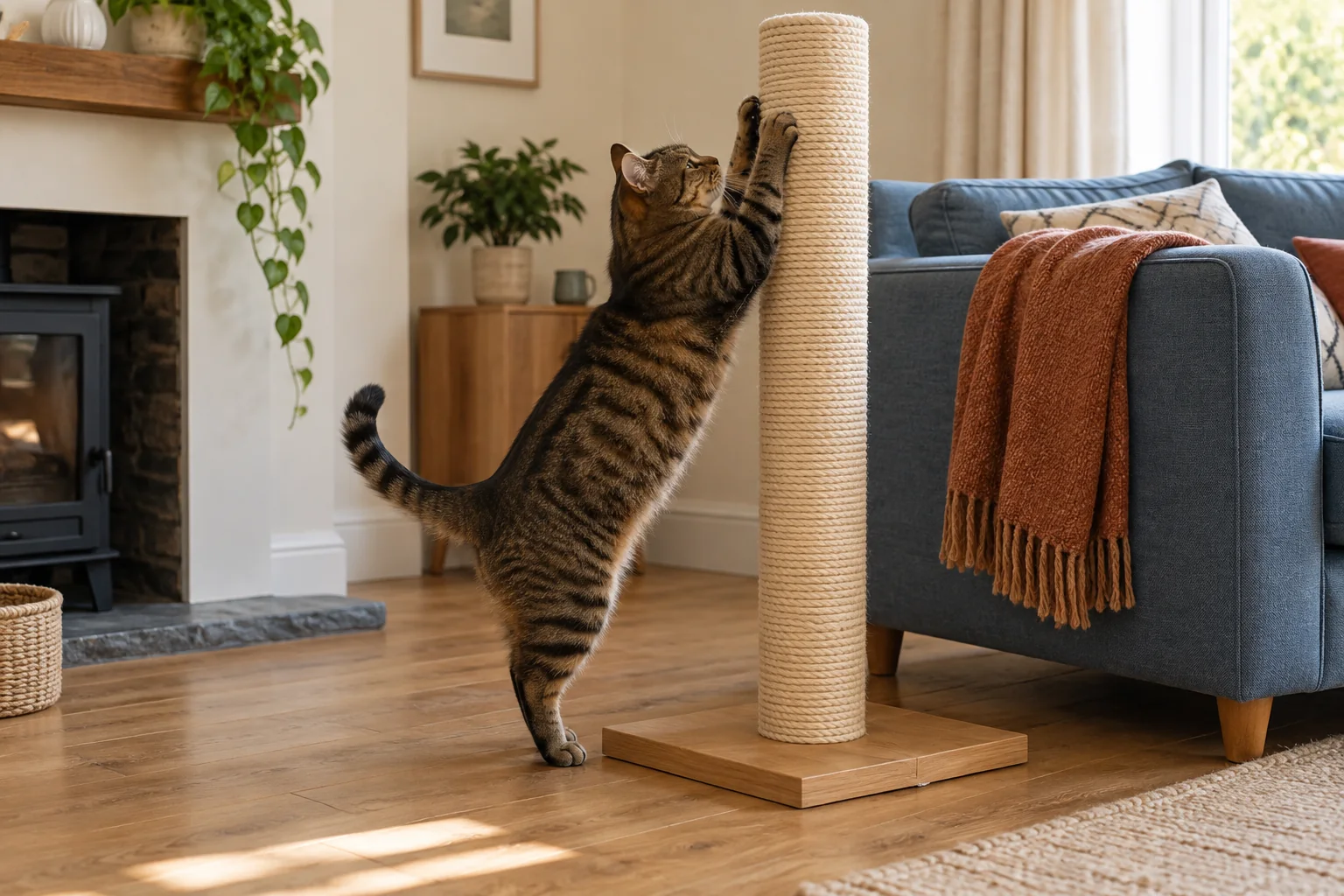
Start by watching your cat. A cat that stretches up a sofa arm and one that pulls along a carpet may need different scratching equipment. Buying a taller post will not necessarily satisfy a cat looking for a horizontal surface.
Upright posts
Look for enough scratching length for a full stretch and a base that stays steady under use. Decorative caps and platforms are not usable post length. Check the assembled height of the actual scratching section, rather than relying on the overall tower measurement.
Cats Protection recommends sturdy posts and an appropriate scratching orientation. Its guidance also covers horizontal pads for cats that choose carpets or stairs.
SmartCat Ultimate scratching post, grey
Best for: A full upright stretch
A tall, straightforward post with a woven sisal surface and a broad square base. It is a useful option for a cat that chooses upright scratching and needs room to stretch, without adding a whole climbing tower.
What stands out
- A dedicated vertical scratching surface
- Broad base without extra platforms
Keep in mind
- Needs assembly and a flat, steady position
- Not a substitute for a horizontal scratcher
- Approx. 81 cm overall height
- Approx. 41 × 41 cm base
- Woven sisal
Pads and angled scratchers
A flat cardboard pad, a sloping board and a sisal post offer different positions. Think about what the cat will stand on and whether the surface can slide across your floor. Compare the working area with the overall product size; a large outer frame does not necessarily provide a large scratchable area.
For replaceable cardboard inserts, record the exact insert dimensions and model name. A pack described as a universal refill still needs to fit the holder.
Amazon Basics curved cardboard scratch pads, 2 pack
Best for: Horizontal scratching in more than one spot
Two curved, double-sided cardboard pads for a cat that prefers scratching near floor level. The separate pads also let you offer a surface in two places without buying two large pieces of furniture.
What stands out
- Both cardboard faces can be used
- Easy to position beside an existing scratching spot
Keep in mind
- Cardboard wears and can shed pieces
- Check that the pad does not slide on your floor
- 2 pads
- 41.9 × 20.6 × 4.1 cm each
- Catnip included
Put it where the habit happens
Place a suitable alternative near an existing scratching location rather than hiding it in an unused corner. Cornell's feline behaviour guidance explains matching the cat's preferred material and orientation, and placing a post beside a chosen scratching site.
Avoid making the new equipment awkward to approach. A post squeezed behind a chair may fit your floor plan yet give little room for your cat to stretch against it.
Replacement or a new post?
If the scratchable covering wears out but the structure is sound, a manufacturer-supplied replacement may make sense. Check threads, fixing length and compatibility. If the base or connection is damaged, more rope will not solve the structural problem. Follow the manufacturer's repair guidance.
A cat tree can combine scratching with resting, but a separate post lets you place a scratching surface where your cat actually uses the room.
Choose a shape before comparing finishes
Use tall scratching posts for an upright stretch, horizontal scratchers for floor-level pulling, or angled scratchers for an incline. An angled board is another option to offer, rather than a halfway height that every cat should prefer.
The sisal versus cardboard comparison separates surface feel, debris, cleaning and repair. A spare scratching station in a useful location can add more choice than a larger version of a surface the cat ignores.
Keep placement and wear in the decision
Our scratching-post placement guide helps you leave room for the stance and stretch as well as the base. Position a new surface deliberately and keep a successful existing option available while the cat explores it.
Use when to replace a scratching post to distinguish normal surface wear from loose joints or damage. For a repairable tree or post, the replacement compatibility guide explains the dimensions and threads to check. A whole-unit cardboard scratcher and a replaceable sisal column have different ownership costs even when their initial prices are similar.
Read the guides
Find the next useful guide
Choose the scratching direction first, then narrow the material, position and replacement needs.
Choosing, setup & care
Work through fit, everyday decisions and upkeep.
- Sisal versus cardboard cat scratchers Compare woven sisal, sisal rope and corrugated cardboard by scratching direction, stability, wear and replacement. Use your cat’s existing habits to choose.
- When to replace a scratching post Separate normal surface wear from loose joints, exposed fittings and structural damage. Decide whether a post needs monitoring, a supported spare or full replacement.
- Where to put a scratching post Place a scratching post beside the habit it needs to serve. Plan floor grip, a full stretch, separate household resources and gradual changes.
Parts & compatibility
Match replacements to the exact equipment.
Frequently asked questions
Should I buy a vertical, horizontal or angled scratcher?
Observe the direction your cat already chooses. Upright stretching, floor-level pulling and scratching along an incline call for different working surfaces. Offer a stable suitable alternative near the established location and keep successful equipment available while you assess a new shape.
Is sisal always better than cardboard?
Neither material is a universal winner. Compare the texture the cat uses, the usable working area, stability, debris and the supported replacement routine. Cardboard often means replacing a body or insert; a sisal post may have compatible structural parts, but that needs checking.
How tall should a scratching post be?
Look for enough usable scratching length for your cat to stretch comfortably. Overall product height can include caps and beds that add no working surface. Compare the actual post section and stable base rather than choosing solely from a height printed on the listing.
Where should a new scratcher go?
Start near the scratching or resting locations your cat already uses, with room to approach and stretch. Avoid hiding it behind furniture or obstructing a doorway. The position should work for the cat as well as fit the available floor space.
When does a worn scratcher need replacement?
Inspect covering and structure separately. Loose connections, a damaged base or exposed unsafe parts need prompt action in line with the maker’s guidance. Surface wear may permit a supported replacement, but wrapping more rope around a structurally damaged post does not make it sound.


