
Buying guide · Feeding
Best wide, shallow cat food bowls
Compare shallow food dishes in steel, ceramic and recycled plastic. Match usable width, rim, stability and cleaning to wet or dry meals.
The short answer
Choose around the way your cat uses it
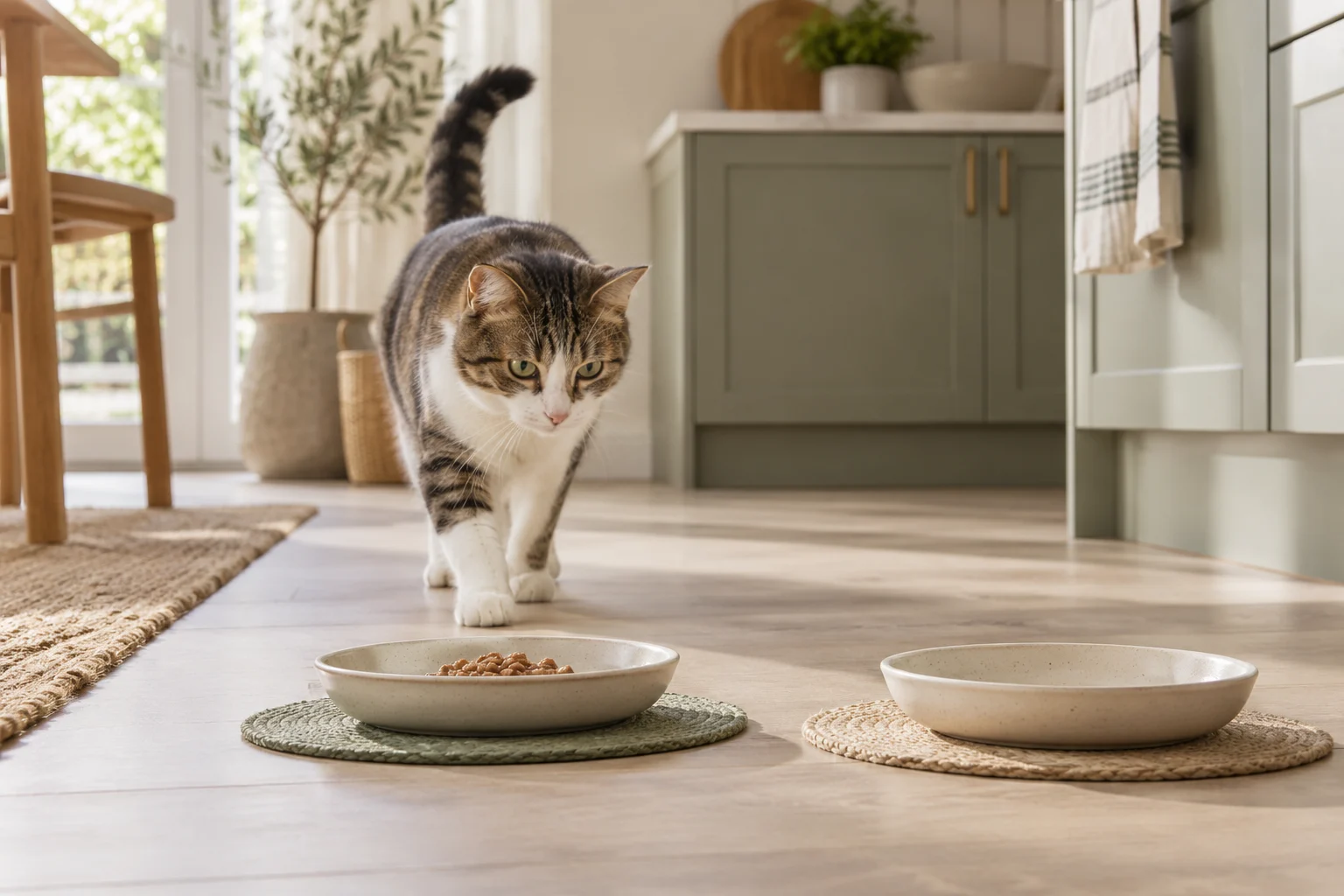
Choose a food dish with enough usable width for the meal, a rim your cat can reach over comfortably and a base that stays steady. The Classic Superdish offers shallow steel with a rubber rim, Mason Cash a small ceramic saucer, and Beco Steady a broader lightweight format. Do not use bowl capacity as a meal allowance or treat a whisker-friendly label as a diagnosis or health guarantee.
Compare the options
| Option | Format | Selected size detail | Main consideration |
|---|---|---|---|
| Classic Superdish | Shallow steel with rubber rim | Large 500 ml | Confirm usable diameter |
| Mason Cash saucer | Ceramic | 13 cm; 200 ml | Small serving surface |
| Beco Steady | Broad lightweight bowl | 17 × 17 × 3 cm outside | Inside width; not microwave safe |
A wide, shallow cat food bowl is useful when you want the meal easy to reach rather than hidden at the bottom of a narrow dish. The best shape still needs to match the portion, food texture and way your cat approaches it.
This guide compares three practical food-dish formats: shallow steel with a gripping rim, a compact ceramic saucer and a broader lightweight bowl. Our cat water-bowl guide covers drinking capacity and water placement; the priority here is serving and clearing meals.
Cats Protection’s home preparation guidance recommends quiet mealtimes with food and water apart. A well-shaped bowl still needs a location where the cat can eat without being disturbed.
Compare the meal surface rather than the advertised capacity
A 500 ml capacity does not mean a cat should receive 500 ml of food. It describes how much the dish may hold, usually in a way that says little about a normal meal spread across the bottom. Set the portion using the food’s guidance and your cat’s individual feeding plan.
For wet food, consider whether a normal portion can be spread into an accessible layer without pushing it against a high rim. For dry food, a completely flat plate may allow pieces to scatter easily. A low but defined edge can help contain food without creating a deep recess.
Ask for the usable internal diameter where only outside measurements are given. A broad decorative rim or thick wall can consume a noticeable part of the apparent width. The base surface, not the largest outside measurement, is where the meal sits.
For shallow steel and a gripping edge: Classic Superdish
Classic stainless-steel Superdish, large 500 ml
Best for: A shallow steel dish with a gripping rim
A wide, shallow stainless-steel food dish with a fused non-slip rubber rim. The maker lists it as dishwasher safe. Capacity helps describe the dish, but your cat’s meal portion should come from its feeding plan.
What stands out
- Wide shallow profile
- Rubber rim helps limit sliding
Keep in mind
- Check usable diameter rather than capacity alone
- Inspect the bonded rim as well as the steel
- Large 500 ml version
- Stainless-steel bowl
- Fused rubber rim; dishwasher safe
The selected Classic Superdish is the large 500 ml version, described by the maker as wide and shallow. It has a fused non-slip rubber rim and is listed as dishwasher safe. That combination is useful when you want a simple steel meal surface with some resistance to sliding.
Steel is light enough to handle easily, while the rubber contact area can help keep the dish in place. Check the fit on your own floor or feeding mat: non-slip does not mean immovable, particularly when food or water gets underneath.
Inspect the rim as well as the steel when washing. A bonded edge creates another place to check for damage and trapped residue. Confirm the selected size’s usable diameter before buying if you need a particularly broad plate for a large cat or a spread-out wet meal.
For a compact ceramic food saucer: Mason Cash
Mason Cash Colour Mix cat saucer, grey
Best for: A shallow ceramic alternative
A 13 cm stoneware saucer with a listed 200 ml capacity. Choose the shallower profile if that suits the cat, while allowing for more frequent checks.
What stands out
- Low saucer shape
- Straightforward stoneware cleaning
Keep in mind
- Less listed capacity than the Cane bowl
- Check ceramic for chips and cracks
- 13 cm diameter
- 200 ml listed capacity
- Dishwasher safe
The grey Colour Mix saucer is listed at 13 cm diameter with a 200 ml capacity. It offers a compact ceramic format when a larger dish is unnecessary and you prefer a firm, substantial-feeling bowl.
Its smaller size is a meaningful limitation. Check whether the normal meal remains easy to reach across the bottom. Two small ceramic saucers do not automatically serve the same purpose as one larger shallow plate, especially if your cat needs more room around its muzzle.
The selected saucer is dishwasher safe. Inspect the glaze, rim and underside for chips or cracks during cleaning, and replace damaged ceramic rather than smoothing a sharp area at home. Keep the dish on a level surface where it cannot be knocked from a worktop or shelf.
For a broader lightweight dish: Beco Steady
Beco Steady cat bowl, olive green
Best for: A shallow bowl with a non-slip base
A wide, shallow recycled-plastic dish with a grippy base and an easy-grip handle. Useful where a lower rim matters more than a deep reservoir.
What stands out
- Broad shallow shape
- Easy-grip handle for lifting
Keep in mind
- Inspect plastic for scratches and wear
- A shallow bowl needs attentive refilling
- 17 × 17 × 3 cm outer size
- Dishwasher safe
- Not microwave safe
The olive Steady bowl has listed outside dimensions of 17 × 17 × 3 cm. Its broad, low outline gives a different starting point from the smaller Mason Cash saucer, while being lighter to handle than a comparable ceramic dish.
Those outside measurements include the body and rim. Check usable food-contact width rather than assuming there is a full 17 cm flat serving surface. A lightweight format can be convenient for washing and travel, but the cat should not have to chase it across the floor.
The selected version is dishwasher safe and not microwave safe. Transfer food to a suitable separate container if warming is part of your normal routine. Inspect the surface for scratches and wear, and replace a damaged dish instead of using abrasive tools to restore it.
Match the edge and surface to the meal
| Meal situation | Useful feature | What to watch |
|---|---|---|
| Wet food spread across the bottom | Broad reachable base | Residue at the rim and any textured joins |
| Small dry-food serving | Low containing edge | Pieces rolling away from a very flat plate |
| Several meals with washing between them | A spare matching clean dish | Capacity does not set the portion |
| Cat pushes the bowl while eating | Stable base and suitable floor contact | Trapped moisture or food beneath a gripping rim |
Avoid changing the dish, food, feeding location and meal size all at once if your cat already eats comfortably. A simple change is easier to assess. Keep the familiar option available during an ordinary transition rather than forcing the cat to use a new shape.
Treat rim contact as an observation, not a diagnosis
Some cats appear to prefer eating from a broad plate, while others comfortably use a modest bowl. Observe whether the cat reaches food around the edges, pauses after the middle is eaten or repeatedly moves the dish.
Those observations do not establish a specific condition. Marketing terms such as whisker-friendly, anti-vomiting or stress-free are not evidence that a bowl treats the cause of a feeding change. New reluctance to eat, difficulty chewing or an altered appetite needs veterinary attention.
Comfortable posture also depends on floor grip, location and whether another pet is watching. A more expensive bowl cannot resolve a contested feeding station. Keep each cat’s meal accessible in a suitable separate place.
Keep food contact and floor contact clean
Wash dishes after meals and inspect the surfaces that meet the food. Follow the exact care instructions, including any restrictions on the base or bonded components. A dishwasher-safe label is not permission to put every matching-looking accessory through the same cycle.
Lift the mat and dish to check beneath them. Wet food and moisture can gather under a gripping edge even when the visible bowl looks clean. Dry the support surface before putting the dish back so it sits flat.
Keep drinking water separate from the meal setup where appropriate. The water-bowl placement guide explains that choice. A shallow dish can be versatile, but the routines for food residue and clean drinking water remain different.
Choose the format that makes ordinary meals easier
Choose Classic for shallow steel and a gripping rim, Mason Cash for a compact ceramic saucer, or Beco for a broader lightweight outline. Compare the internal meal surface and the cleaning routine before deciding on material or colour.
If your cat needs to slow down and work for suitable food, that is a different task from selecting an ordinary bowl. Compare beginner puzzle feeders while keeping portions within the same feeding plan. A normal food dish should first provide straightforward, comfortable access to the meal.
For spills around the bowl, compare feeding mats by usable surface, rim and cleaning access.
Frequently asked questions
Are wide shallow bowls better for cats?
They can make food easier to reach and spread out, but the best dish depends on the cat, food and portion. Look at comfortable posture, access to food around the edges and stability. A broad saucer is a useful option to try, not a universal medical recommendation.
Do shallow bowls prevent whisker fatigue?
A shallow shape can reduce contact with the rim, but product labels do not establish the cause of a feeding problem or guarantee a health benefit. If a cat eats less, drops food, avoids chewing or changes its usual behaviour, seek veterinary advice rather than relying on a new bowl.
Can I serve wet and dry food in the same kind of dish?
A suitable food-safe dish can hold either, but practical needs differ. Wet food spreads and leaves residue; dry food can scatter from a very low edge. Wash food-contact surfaces after use and set portions from the food guidance and your cat’s individual feeding plan.
Is a raised shallow bowl necessary?
No. Elevation is a separate choice from width and depth. Start with a stable dish your cat can comfortably use at its normal feeding position. If a health or mobility issue affects feeding posture, ask your vet for individual advice rather than assuming every raised bowl helps.
Can I use the same saucer design for water?
Possibly, if it is suitable for drinking and refilled often enough, but a shallow food dish may have limited water capacity. Keep drinking water in an appropriate separate location and choose that setup using the water-bowl guide. A dish being versatile does not mean food and water should share one station.