
Buying guide · Cat trees & perches
Best cat trees for small homes
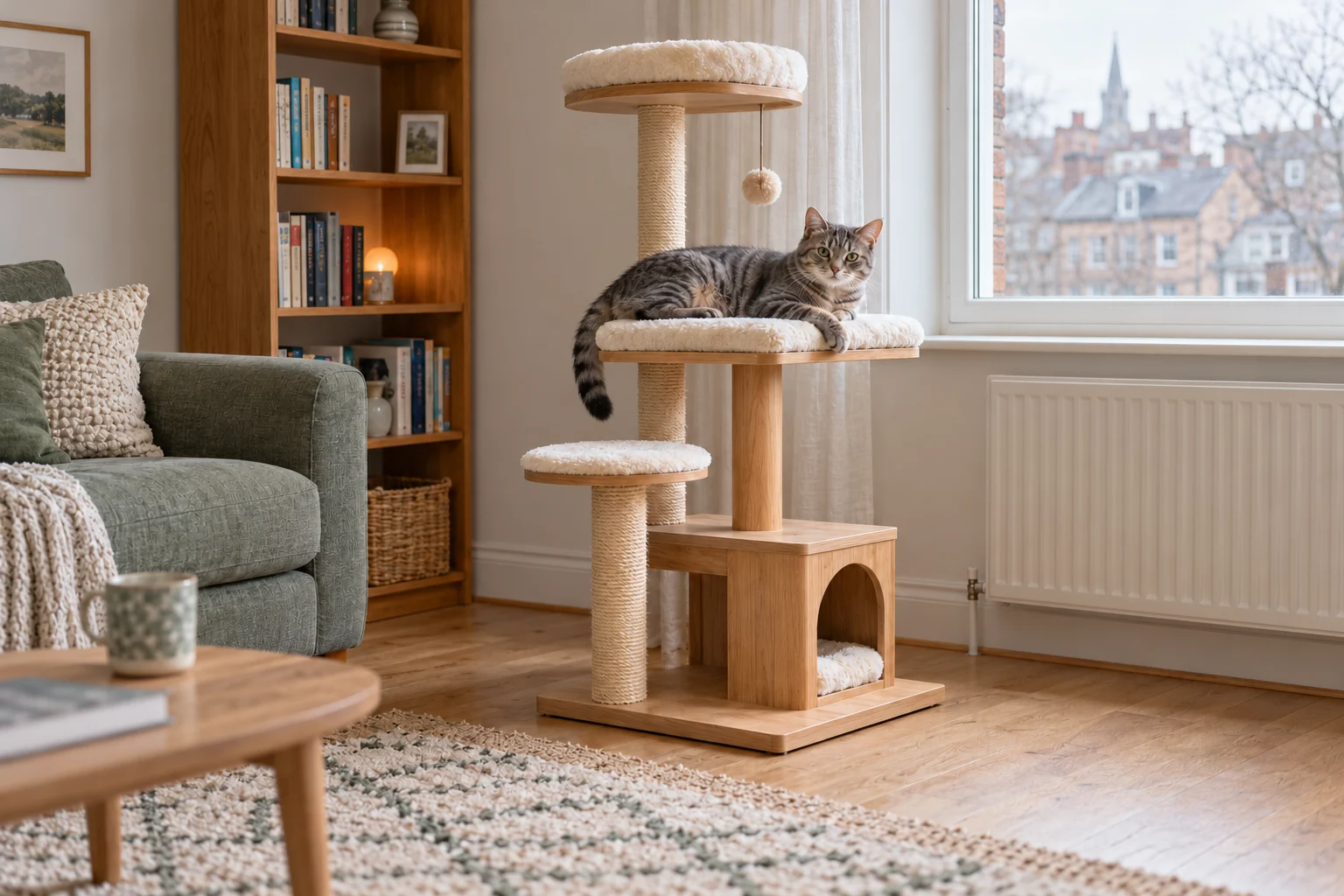
Compare three compact cat trees by footprint, resting space, cleaning and access. Choose a useful perch without blocking the room.
The short answer
Start with the job your cat needs it to do
For a lower furniture-style tree with a hideaway, start with the Catit Vesper Base. The Feandrea ramp tree offers more plush-covered activities within a smaller listed square outline. If you mainly want one raised resting place, the Amazon Basics hammock may do the job with fewer levels. Measure the outermost platform and the approach route before choosing any of them.
Compare the options
| Model | Space to plan | Resting arrangement | Main compromise |
|---|---|---|---|
| Catit Vesper Base | 56 × 56 cm base; about 84 cm tall | Two-entry den and raised platform | A square base still takes room |
| Feandrea compact ramp tree | Listed 48.5 × 48.5 × 96 cm | Cave, upper perch and ramp | Fixed plush needs careful cleaning |
| Amazon Basics hammock | Check selected size drawing | One elevated hammock | Little choice of resting position |
Compare the space occupied by the listed outlines
A small difference along each side adds up across the rectangle. These calculations turn the stated length and width into a planning area, so you can compare what needs marking out in the room.
| Option | Published outline used | Calculated rectangle | What still needs checking | Source |
|---|---|---|---|---|
| Catit Vesper Base | 56 × 56 cm | 0.3136 m² | Maker’s overall length and width; check any platform overhang and approach space | [1] |
| Feandrea compact ramp tree | 48.5 × 48.5 cm | 0.2352 m² | Selected listing’s overall length and width; a smaller rectangle does not establish a larger usable bed | [2] |
The two stated rectangles differ by 0.0784 m², about 25% of the Vesper rectangle. The 7.5 cm difference on each side matters differently from a claim that one whole tree is “25% smaller”.
Mark the complete shape beside furniture, then allow the route up, the route down and access for assembly. A narrow corner that fits the base can still obstruct a bed or restraint.
Sources for this comparison
- Catit Vesper Base dimensions — 56 × 56 cm overall length and width.
- Selected Feandrea listing — 48.5 × 48.5 cm selected catalogue outline; exact ASIN B07QL5B313.
What makes a cat tree work in a small home?
A compact cat tree needs to earn the space it occupies. A narrow base is useful only when the resting platform fits your cat, the route up is practical and the furniture does not obstruct the way through the room. Think of the whole arrangement: base, overhang, landing space and the room you need to assemble it.
Before comparing models, watch where your cat currently rests. A window-side lookout, a sheltered cave and a hammock solve different jobs. If your cat stretches along a sofa cushion, a tiny round basket may be an unhelpful trade for a smaller footprint. If they mainly want an enclosed spot, an extra metre of tower may add little.
These three choices cover different uses rather than three heights of the same tower. Compare usable resting space and the complete assembled outline for each one. For more generous resting areas, compare our large-cat tree guide.
Catit Vesper Base: a lower tree with a hideaway
Catit Vesper Base, walnut
Best for: A lower furniture-style tree with a hideaway
A lower wooden-style tree with a two-entry cube and removable cushions. Its 56 cm square base suits a measured corner, while the den and raised platform offer different resting positions.
What stands out
- Two entrances to the cube
- Replacement parts offered by the maker
Keep in mind
- Base is wider than many slim towers
- Hand-wash directions are different from machine-washable covers
- 56 × 56 cm base
- Approx. 84 cm overall height
- Removable cushions
The Vesper Base makes sense when you want a rigid, furniture-style surface and a proper den without a very tall structure. Catit lists a 56 × 56 cm base and an overall height of about 84 cm. The cube has two entrances, so it is worth considering how both will face the room instead of pushing one tightly against a wall.
Its 56 cm square footprint is substantial beside a narrow chair or in an alcove. Mark that square on the floor, then compare the platform outline in the assembly drawing. Leave space to lift off the cushions and reach the screws. The lower height can suit the scale of a small sitting room, but it does not establish that the step between levels suits an older or less mobile cat.
The removable cushions and scratching mats are a practical ownership detail. Catit's Vesper Base information specifies hand washing for these pieces and offers replacement parts. That is easier to plan around than assuming every soft surface can go through a machine. Keep the exact model code when ordering spares.
Choose it for: an enclosed den and a raised perch in one lower piece. Check first: whether the bed and den have enough usable space once the cushion is fitted.
Feandrea ramp tree: more activities in a compact outline
Feandrea compact cat tree with ramp
Best for: A compact tower with a scratching ramp
A plush-covered 96 cm tree with a cave, raised perch and sisal scratching ramp. It offers several activities within a listed 48.5 cm square outline, provided the final platform positions and restraint fit your room.
What stands out
- Cave and upper resting space
- Ramp adds a lower approach
Keep in mind
- Plush-covered panels need their own cleaning routine
- Check usable perch area and follow restraint instructions
- Listed 48.5 × 48.5 × 96 cm
- Sisal scratching ramp
- Anti-tip kit included
The selected Feandrea listing gives 48.5 × 48.5 × 96 cm overall dimensions and combines a cave, upper resting area and sisal ramp. That makes it the activity-rich option here when there is only room for one piece of cat furniture. The ramp offers another approach to a level; it is not a guarantee that a cat with reduced movement can use the entire tree.
The trade-off is the plush finish. Fixed fabric can collect hair in seams, under beds and around scratching sections. Read the supplied care instructions before using water or cleaners, and allow the whole structure to dry before your cat returns. Removable toy attachments also need regular inspection and can be put away if worn.
An anti-tip kit is included in the listing. Plan its use before ordering: check where the restraint attaches, whether the wall is suitable and what fixings the instructions require. A product's described load figure should not be treated as a jumping guarantee, or divided between cats without a clear explanation from the maker.
Choose it for: a cave, perch and scratching route within one compact arrangement. Check first: the actual resting area and restraint position, not just the overall height.
Amazon Basics hammock: a simpler resting choice
Amazon Basics hammock cat tree, beige
Best for: One compact hammock and scratching spot
A compact raised hammock supported by two jute-covered scratching posts. It is a simpler alternative to a tall tower when you mainly want one resting spot and a nearby scratching surface.
What stands out
- Combines resting and scratching
- Fewer levels to fit into a room
Keep in mind
- Check the usable hammock area for your cat
- A raised hammock is not a ground-level bed
- Two jute-covered posts
- Plush hammock
- Assembly required
This hammock combines a raised fabric resting area with two jute-covered scratching supports. It is a useful comparison if you are about to buy a much larger tower mainly to provide one bed. With fewer levels, there are fewer choices for a cat that wants to move between resting positions, but it may fit an ordinary corner more naturally.
Check the selected listing's dimension drawing rather than relying on the order of the inch measurements in the title. The hammock's usable width and depth matter more than the fabric's outer outline. A cat that likes a firm flat platform may prefer the Vesper's rigid surface to a hanging bed, even if both fit your floor plan.
The lower arrangement is still elevated. Put it where the cat can approach without squeezing between chair legs, and make sure scratching does not make the base move across the floor. It is not our default suggestion for a large cat whose resting area needs a clearly documented broad platform.
Measure three outlines before you order
Start with the base outline, using a tape measure and removable markers on the floor. Next, mark the widest assembled outline, including beds, ramps and dangling accessories. Finally, leave the working outline: the space for a cat to jump down and for you to clean or tighten the tree.
Open nearby doors, pull out the dining chair and draw the curtains while the outline is marked. A position that looks spare when the room is still can become a daily obstruction. Leave windows, radiator controls and access routes usable. Keep cords and blinds out of reach of the proposed perch.
A corner is not automatically the best position. Your cat may prefer a lookout beside the window or a resting area near the people in the room. Cats Protection's indoor-cat guidance explains the value of climbing and suitable places to rest. Choose a position your cat can actually use rather than the last empty gap.
When a separate post and bed make more sense
A tree puts several activities in one place. That can save furniture purchases, but it also ties scratching and resting to the same position. If the sofa arm is the scratching target and the favourite sleeping spot is across the room, separate equipment may give you more freedom.
Compare a tall scratching post near the existing scratching habit with a washable bed in the preferred quiet corner. Measure both footprints together; two small items can occupy more floor than one tree. The useful comparison is the entire room arrangement, including the paths between resources.
Assembly, cleaning and the next set of cushions
Keep the manufacturer's assembly sheet and the product code together. Tighten connections as instructed, inspect them after initial use and keep checking for looseness, damaged fittings or cracked panels. If a restraint is required, fit it before allowing access. Extra rope cannot repair a failing structural joint.
For cleaning, distinguish wipeable boards, fixed plush, removable covers and foam inserts. Do not transfer a cushion's washing instruction to the whole tree. Spare parts are valuable when their dimensions and fixings match; a similar-looking column may have a different thread or connection length.
If you are still deciding on the shape, our cat-tree selection guide takes you through resting-space measurements, routes and replacement support. Start with the cat and room measurements, then use the shortlist above to narrow the purchase.
Before first use, follow the stability checks. Keep cat-tree cleaning and supported post replacement in the ownership plan.
Sources and how we chose
Vesper Base dimensions and care details come from Catit. Feandrea and Amazon Basics specifications come from their brand listings; confirm the selected drawing and supplied instructions. Cats Protection supplies the home-environment context. The footprint comparison above derives planning areas from those published dimensions.
Frequently asked questions
What size cat tree is best for a small flat?
There is no single best overall height. Measure the complete footprint, including overhanging platforms, then check usable resting space and the route between levels. A lower tree with a useful bed can be a better fit than a taller narrow tower whose platforms your cat cannot comfortably use.
Does a compact cat tree need to be attached to a wall?
Follow the instructions for the exact model. A small footprint does not remove a restraint requirement. If an anti-tip kit is supplied or required, check the attachment position, wall construction and specified fixings before buying. Do not use an unsuitable wall fitting merely to make a chosen corner work.
Can a large cat use one of these compact trees?
Only if the usable bed dimensions, openings and manufacturer guidance fit that individual cat. Small floor space and a large cat are separate requirements. The hammock is not a universal large-cat recommendation; compare the dedicated large-cat guide when a broad supported resting area is the main concern.
Should I put the tree next to a window?
A lookout can make the position appealing, provided the window and surrounding area remain safe and accessible. Check blind cords, curtain movement, ventilation and the route down. A window-side position should still allow correct assembly and any required restraint, without blocking everyday access.
Is a cat tree better than a separate scratching post?
A tree combines activities at one location, whereas a separate post can go beside the place your cat already scratches. If scratching and resting happen in different parts of the home, separate equipment may be more useful. Compare the total footprints and placement needs of both arrangements.