

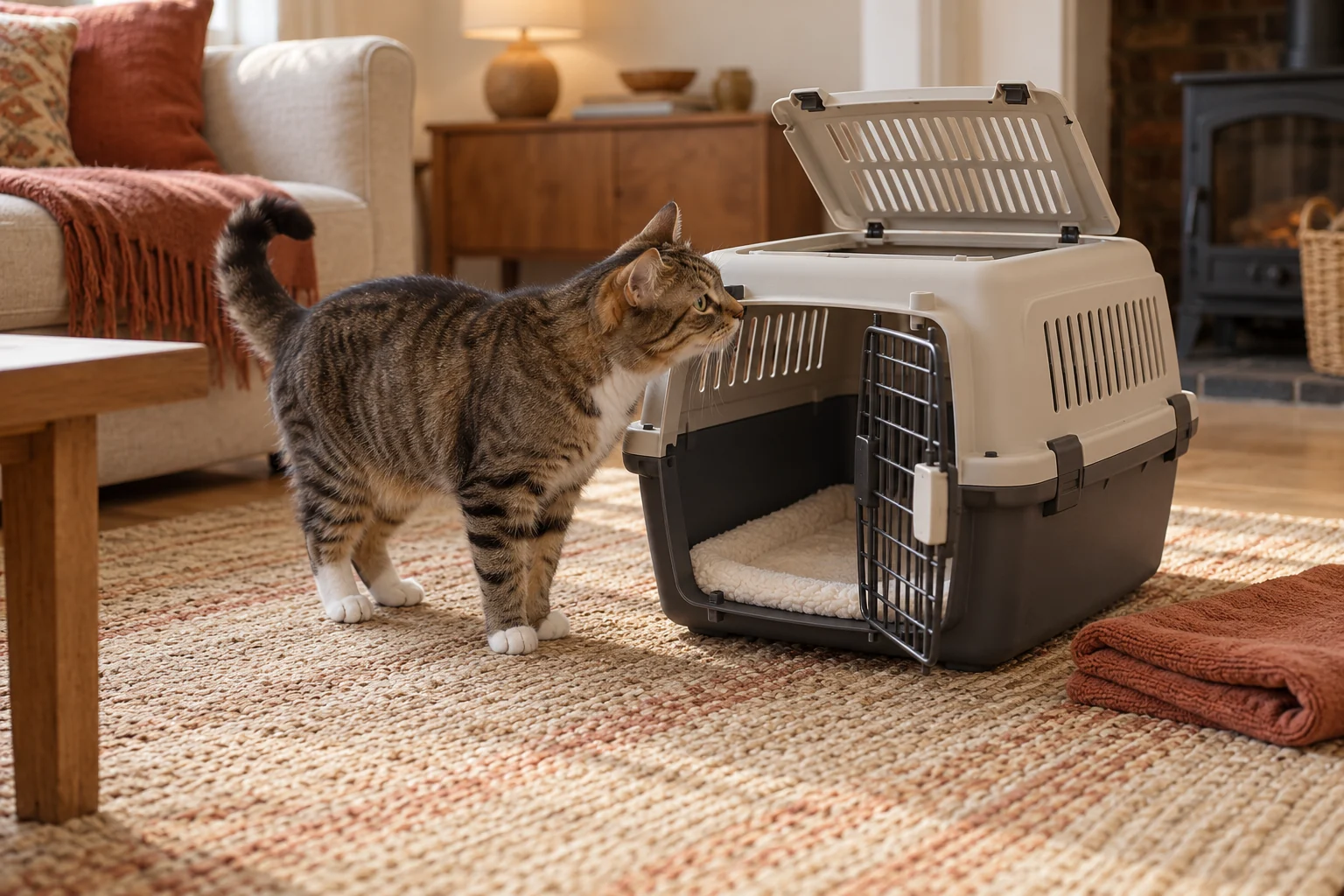
Choose a carrier around the cat's usable space, the way you can get them in and out and the strength of its closures. An attractive outer shape does not tell you whether the floor stays supported when the carrier is lifted.
Hard shell or soft sides?
A hard carrier can make the inside shape and access points easier to assess. A soft carrier may fold away more easily, but check the supported base, zips and how its sides behave when lifted. Compare the manufacturer's weight limit with the cat's actual weight rather than a generic small-pet label.
Measure the inside and account for bedding. The advertised length may include handles or outer fittings, which do not add usable space.
Think about the visit
Look at the front opening, any top opening and whether the upper half can be removed. Check whether opening one section weakens another closure. Keep the instructions so you can reassemble the carrier correctly after cleaning.
Cats Protection recommends strong, secure, easy-clean carriers and explains top access. For a nervous cat, familiarisation is part of the purchase decision: can the carrier remain accessible at home as a normal object between trips? Choose something you can store without dismantling it every day if that is how you intend to use it.
Catit Cabrio carrier, turquoise
Best for: Wide access for everyday vet visits
A rigid carrier with a wide-opening upper section and front access, designed to make the inside easier to reach. It can remain open at home as a familiar resting space between visits.
What stands out
- Multiple access points
- A rigid shape that can be inspected before use
Keep in mind
- Outer dimensions do not establish inside fit
- Follow the exact closure and vehicle-securing instructions
- 51 × 33 × 35 cm outer size
- Top and front access
- Removable food and water tray
Closures and carrying
Inspect latches and hinges before each trip. A cracked fitting or loose connection deserves attention before the carrier is loaded. Follow the maker's instructions for lifting and securing it in a vehicle; do not invent a seat-belt route through a handle that was not designed for it.
A marketed airline-compatible label is not a guarantee for a particular flight. Check the carrier measurements and the operator's current requirements separately if you need to fly.
Cleaning and bedding
Check which fabric pieces come out and how the shell or liner can be washed. Bedding should fit without obstructing ventilation or the door. Keep a spare washable liner if it makes the daily routine more manageable.
One well-fitting everyday carrier is a useful piece of household equipment. Start with Cats Protection's home preparation checklist, which includes a sturdy, well-ventilated carrier among the essentials, and compare models against the job you actually need.
Ferplast Atlas 20 Deluxe Open carrier
Best for: A conventional hard carrier with top access
A hard carrier with front and top openings, side clips and a removable cotton cushion. The top access and detachable shell are useful details to compare when planning how to load, clean and reassemble it.
What stands out
- Upper shell detaches for cleaning
- Washable cotton cushion included
Keep in mind
- Select the 20 Deluxe Open model carefully
- Check inside fit and the supplied instructions before travel
- 57.6 × 37.4 × 33 cm outer size
- Front and top openings
- Cotton cushion and bowl
Compare the carrier around the actual journey
Use how to measure a carrier to check internal room and supported weight before choosing a size. Top-opening carriers focus on useful access, while carriers for large cats put usable floor, roof shape and carrying practicality first.
The hard versus soft comparison covers structure, openings, storage and cleaning. Neither material label establishes a particular car-restraint method. Read securing a carrier in a car alongside the exact carrier and vehicle instructions; a handle is not automatically a supported seat-belt guide.
Prepare at home and keep the fittings sound
Introduce the carrier at home before the day it is needed. The vet-visit preparation guide turns that familiar equipment into a practical departure routine. Liners and absorbent pads need to fit without bunching, crowding usable space or obstructing the door.
Afterwards, use carrier cleaning for shell, bedding and reassembly checks. The replacement guide helps separate a supported repair from a damaged structure that needs retiring. Match doors and clips by model rather than buying a grid or fastening solely because its outside dimensions look similar.
Read the guides
Find the next useful guide
Choose fit and secure access first, then plan familiarisation, the journey and ongoing care.
Choosing, setup & care
Work through fit, everyday decisions and upkeep.
- Hard versus soft cat carriers: which suits your journey? Compare rigid plastic and structured fabric carriers by security, usable room, cleaning and journey requirements. Choose around your cat and the exact transport rules.
- How to clean a cat carrier Clean a rigid carrier’s shell, door, seams and liner without leaving residue. Separate routine washing from veterinary infection-control advice and check reassembly.
- How to introduce a cat carrier at home Build a calm carrier routine from nearby bedding to voluntary entry, a closed door and a short lift. Learn when to slow down and how to avoid rushed practice.
- How to measure your cat for a carrier Measure your cat’s length, standing height, width and weight, then compare internal carrier space, door openings and handling. Avoid misleading outside dimensions.
- How to prepare a cat carrier for a vet visit Prepare the carrier, liner, spare bedding and appointment details before a vet visit. Check closures, ventilation and the journey while keeping handling calm.
- How to secure a cat carrier in a car Secure a carrier using its exact instructions and the vehicle handbook. Includes the manufacturer-supported Catit Cabrio belt route and a practical pre-journey check.
- When to replace a cat carrier Check carrier damage, closures, size and cleaning before deciding to repair or replace. Distinguish a supported spare part from a cracked or unreliable structure.
Parts & compatibility
Match replacements to the exact equipment.
Frequently asked questions
How much room does a cat need inside a carrier?
Assess comfortable posture and turning room using usable internal measurements, not only the outer listing size. Allow for the bedding actually used and check the manufacturer’s supported weight separately. A roomy roof does not compensate for a narrow floor or a carrier that is awkward to lift securely.
Is top access the same as a removable upper shell?
No. A top hatch and a removable upper half offer different access and use different fittings. Check how each part opens, how the carrier must be reassembled and whether any opening affects another closure. Follow the exact model’s instructions before using it around the cat.
Is a soft carrier suitable for every car journey?
Check the exact carrier’s structure, supported use and transport instructions rather than deciding by fabric alone. Vehicle restraint needs a method supported for the carrier and car. Do not improvise a belt route through a handle or assume a travel label establishes crash protection.
Should I replace a carrier with a broken clip?
Stop relying on the damaged carrier until the problem is resolved. A supported exact replacement may be possible if the surrounding shell and connections remain sound. A similar-looking universal clip does not establish compatibility, and replacing a clip will not repair a cracked mounting point.
Can I leave the carrier out between vet visits?
A secure carrier can form part of gradual familiarisation when placed appropriately and configured according to its instructions. Keep the entrance accessible, bedding clean and the setup stable. Voluntary investigation at home is easier to build before a departure deadline than during hurried loading.


