
Buying guide · Carriers & travel
Best cat carrier liners and absorbent pads
Compare absorbent washable carrier pads with draining fleece liners. Match the usable floor, grip, thickness and drying routine without assuming a universal fit.
The short answer
Choose around the way your cat uses it
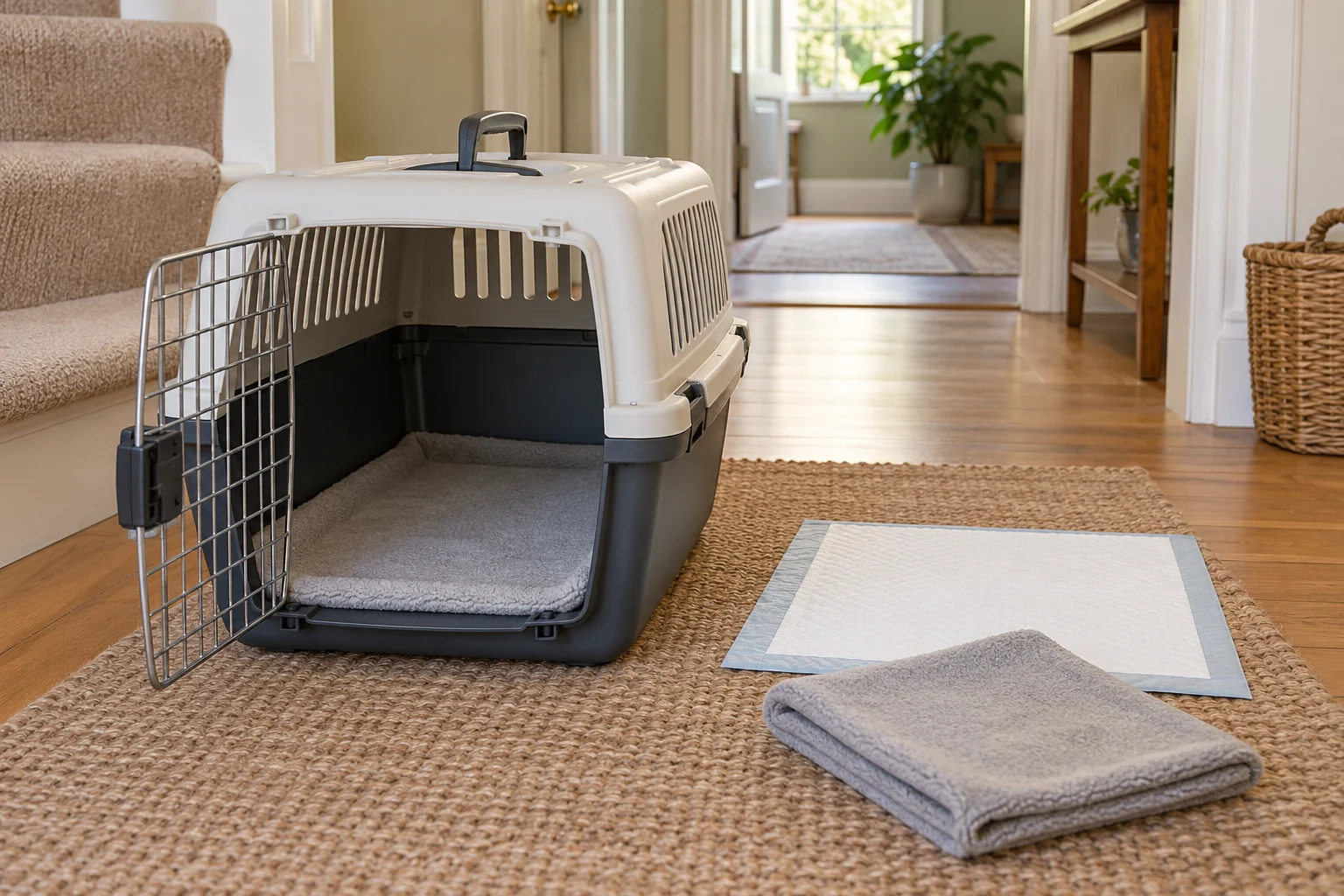
Choose by the carrier’s usable floor and the job the liner must do. A fitted washable absorbent pad can hold a small accident while its waterproof backing limits leakage; draining fleece offers a resting surface but is not a waterproof pad. Keep the layer thin, stable and clear of doors and ventilation, and carry a separate spare. A clean familiar fitted towel may already meet the need.
Compare the options
| Option | Main role | Selected size | Important limit |
|---|---|---|---|
| rocket & rex two-pad pack | Washable absorbency and backing | 17.5 × 11 in each | Measure floor; do not cut |
| Vetbed Original grey | Fitted fleece resting layer | 40 × 30 in large piece | Not ready-fit or waterproof |
The best carrier liner is the one that fits securely and can be changed and cleaned without complication. A product described as soft, absorbent or waterproof may meet only part of that brief. Start with the floor space, then decide what type of protection you need.
This guide compares a ready-made washable absorbent pad with a fleece option for an appropriately fitted resting layer. It is a short comparison of different functions, not a claim that every carrier needs several stacked products.
Work through a liner fit example in one unit
For an illustrative rectangular carrier floor of 43 × 29 cm, convert the pad label before deciding whether it can lie flat. This example is not the internal size of any carrier recommended elsewhere.
| Selected material | Label in inches | Converted size | Difference from the 43 × 29 cm example | Source |
|---|---|---|---|---|
| rocket & rex reusable pad | 17.5 × 11 in | 44.45 × 27.94 cm | +1.45 cm length; -1.06 cm width | [1] |
| Vetbed Original fleece piece | 40 × 30 in | 101.6 × 76.2 cm | +58.6 cm length; +47.2 cm width | [2] |
The ready-made pad is 1.45 cm longer and 1.06 cm narrower than this example floor. One close-looking side therefore does not establish a flat fit in both directions.
The large fleece piece is substantially oversized for this example. Its size does not justify folding it into a carrier or cutting a different multilayer pad; use a supported preparation method for the exact material and keep closures clear.
Sources for this comparison
- Selected rocket & rex two-pad pack — 17.5 × 11 inches per pad.
- Selected Vetbed Original piece — 40 × 30 inch label; preparation permission is a separate question.
Decide what the liner needs to do
For a short ordinary journey, a clean familiar fitted liner may be enough. If accidents are a realistic concern, consider a pad designed to absorb liquid and limit transfer through its backing. Even then, pack a spare rather than relying on an unverified capacity claim.
A fleece layer has a different purpose. It can provide a soft resting surface, but drainage means moisture can reach what is underneath. A fluffy top that feels less wet does not mean the carrier base is clean or dry.
Avoid building a thick stack of pad, fleece and blanket without checking the result. Layers can slide over one another, bunch under the cat and reduce usable headroom. Choose the simplest arrangement that fits the carrier and the cat’s needs.
Measure the carrier floor, not the catalogue outside size
Measure the assembled interior where the liner will sit. Note tapered walls, rounded corners, a raised door lip and any fixing points. A rectangular pad can fit the maximum length and width yet still curl at a narrow corner.
Check fit with the door closed and the top properly attached. The liner must not stop a latch engaging or cover ventilation. In a fabric carrier, keep the supported structural base in place unless the maker explicitly directs otherwise; a soft pad does not replace it.
Use carrier measuring guidance if the cat is already close to the available room. An extra-thick liner cannot improve an undersized carrier.
For washable absorption: rocket & rex carrier pads
rocket & rex reusable carrier pads, pack of two
Best for: A washable absorbent carrier-floor layer
Two washable multilayer pads with absorbent material and a waterproof backing. The listed 17.5 × 11 inch size needs matching to the actual carrier floor; it is not a universal fit.
What stands out
- Spare can travel separately
- Absorbency and backing in one pad
Keep in mind
- Do not cut through the sealed multilayer edge
- Check usable floor fit and supplied wash label
- Two pads
- 17.5 × 11 in each
- Washable multilayer construction
The selected pack contains two pads, each listed at 17.5 × 11 inches, approximately 44.5 × 28 cm. Its multilayer construction combines an absorbent section with a waterproof backing. One pad can be used while the other stays clean in a separate bag.
Measure before ordering. The listing’s carrier use and reference to the maker’s medium carrier do not establish a universal fit for Catit, Ferplast, Sherpa or another brand. Do not fold the pad into a thick ridge just to fit a smaller base.
Keep the sealed edges intact. Cutting a multilayer pad can expose filling and remove the barrier’s finished construction. After an accident, change it when practical in a secure place; waterproof backing is not a reason to leave the cat on a soiled surface.
Follow the supplied wash label rather than assuming a hot veterinary-fleece wash is appropriate. Check for damaged backing, loose seams and persistent odour after washing, and stop using a pad that cannot be kept clean and intact.
For a fitted fleece surface: Vetbed Original
Petlife Vetbed Original, grey 40 × 30 in
Best for: A flat fleece resting surface
A flat washable fleece with the Original green backing. The selected listing is a generous 40 × 30 inch piece, useful when you want a continuous resting surface rather than a bed with raised sides.
What stands out
- No bolster reduces the flat sleeping area
- Can be washed separately from surrounding furniture
Keep in mind
- Original backing is not the Non-Slip range
- Check the supplied care label rather than borrowing another backing’s wash settings
- 40 × 30 in listed size
- Original green backing
- Machine-washable mat
The selected grey Original piece is 40 × 30 inches, approximately 102 × 76 cm. It is much larger than a typical carrier floor and is not a ready-fitted carrier pad. Consider it only where you need a larger fleece piece and can arrange a suitable fitted liner; confirm any trimming method for the exact supplied version with the maker. Do not fold the whole piece into a small carrier.
Original uses the green backing and has drainage properties. It is different from Non-Slip Vetbed, so do not assume the backing grips a smooth carrier floor. Check movement in the assembled carrier before use, and inspect the surface underneath after any accident.
Petlife gives ordinary washing guidance of 40°C with non-biological detergent for this Original product and says not to tumble dry. Its higher-temperature allowance is for occasional disinfection, not a reason to use the hottest cycle after every journey. Follow the supplied label if it differs, and ask the vet about illness-specific cleaning.
A correctly sized ready-made liner is a better purchase when you do not need a larger piece or cannot establish safe fit. The attraction here is the material option, not a claim that this oversized listing drops into every carrier.
Compare the practical trade-offs
| Need | Washable absorbent pad | Draining Original fleece |
|---|---|---|
| Holding a small accident | Absorbent layers do this job | Liquid can pass through |
| Limiting leakage below | Waterproof backing when intact | Not a waterproof barrier |
| Ready-made size here | About 44.5 × 28 cm | Large piece; fitted preparation needed |
| Floor grip | Check in the actual carrier | Original is not the Non-Slip range |
| Care | Exact multilayer-pad label | Exact Original backing instructions |
A familiar towel is another practical option if it fits flat, stays secure and can be replaced. Avoid frayed edges and loose loops. An absorbent pad is useful where its particular construction solves a need; it is not compulsory for every appointment.
Test the liner before the journey
Fit it on the empty carrier floor and press gently at the corners to check for curling or sliding. Close every door and refit the top, then inspect the closures again. Remove anything caught in the latch rather than trying to force it shut.
When the cat enters voluntarily at home, observe whether the surface shifts or the cat struggles to settle. Do not test fit for the first time in a car park. A liner that is comfortable in an open carrier may move once the carrier is lifted.
Stop using material the cat persistently chews or pulls apart. Ask the veterinary practice for an appropriate arrangement if your cat’s health or behaviour makes ordinary bedding unsuitable.
Pack a spare and plan the wash
Carry a clean spare separately from soiled items. If a change is needed, ask for a secure room rather than opening the carrier outdoors or in a busy waiting area. Keep the cat contained while the liner is changed.
At home, wash according to the specific label and dry fully before storage. Check the carrier base as well as the liner; moisture may have passed through fleece or around a pad edge. Use carrier cleaning for the shell and vet-visit preparation for the wider journey.
Material distinctions follow Petlife’s Original Vetbed information. General fit and carrier use follow Cats Protection.
Frequently asked questions
What size carrier liner should I buy?
Measure the usable floor inside the assembled carrier, including shaped corners and the door’s movement. Compare those measurements with the actual pad, not the carrier’s outside length. The liner should lie flat without bunching, blocking a closure or reducing usable space excessively.
Is veterinary fleece an absorbent waterproof pad?
No. Draining fleece lets liquid pass through its structure and does not provide the same barrier as a sealed waterproof-backed pad. Inspect and clean the surface beneath it. Original green-backed Vetbed is also different from the maker’s Non-Slip range.
Can I cut a reusable absorbent carrier pad to fit?
Do not cut a sealed multilayer pad such as the selected rocket & rex example. Cutting opens its construction and can defeat the backing and finished edge. Choose an appropriate size. Trim another material only where the maker confirms that the exact version is suitable.
Are disposable puppy pads suitable for a cat carrier?
Suitability depends on the exact product, fit and the cat’s behaviour. Loose pads can bunch or be chewed, and exposed absorbent filling is a concern. A fitted washable option or familiar liner may be more practical. Keep a spare and follow the veterinary practice’s advice where needed.
How should I wash a carrier liner?
Follow the supplied label for the exact backing and construction. Remove solid soiling appropriately, wash using the specified method and dry fully before storage. Do not transfer a fleece’s high-temperature permission to a waterproof multilayer pad or assume every liner can be tumble dried.