
Practical guide · Water fountains & bowls
How to introduce a cat water fountain
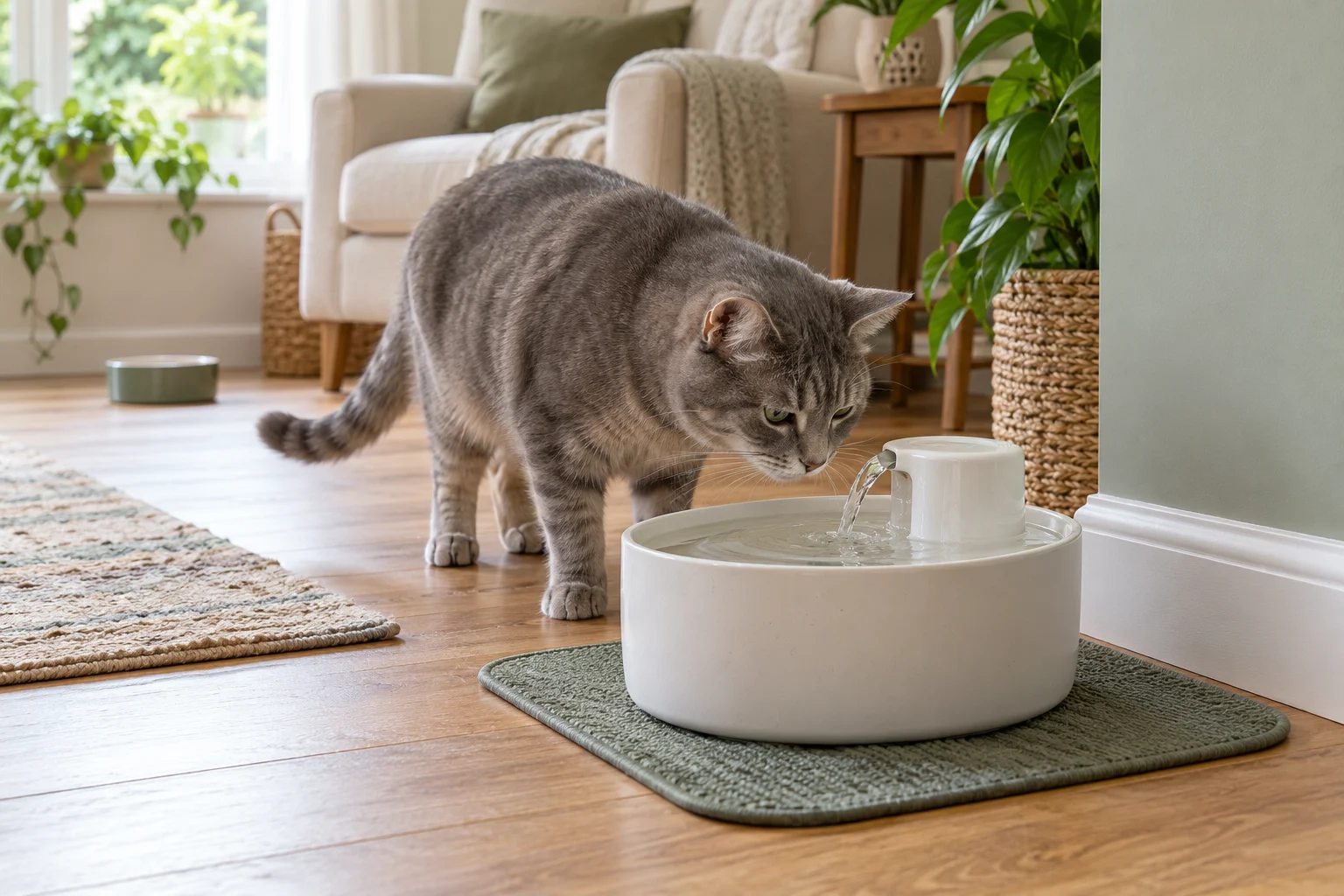
Introduce a cat fountain through a quiet location, familiar water and gradual voluntary investigation. Keep an ordinary drinking bowl available and check cleaning and noise.
The short answer
Keep the familiar bowl while the fountain becomes familiar
Put the assembled fountain in a quiet, accessible place and keep your cat’s familiar fresh-water bowl available. Let the cat investigate voluntarily, then observe a short calm period with the fountain running correctly. Check water level, flow and pump noise before deciding the cat dislikes it. Never run the pump dry or force the cat to touch the water.
A cat fountain introduces more than moving water. There may be a new bowl shape, a motor sound, a cable and a different place to stand. A good introduction makes each of those changes easy to investigate while keeping ordinary drinking water available.
The aim is voluntary use. A fountain that looks attractive in the room but is noisy, awkward to approach or difficult to clean is unlikely to be a helpful upgrade. Start with the installation, then judge the cat’s response over ordinary calm moments rather than one staged encounter.
Choose the location before switching on
Pick a stable, level surface away from litter trays and separate from food. Leave enough space for the cat to approach without being squeezed between furniture or surprised by a passing person. A quiet corner can work, but avoid a dead end where another animal can block the only exit.
Consider the sound of the whole setup. A light shelf can amplify vibration; a hard bowl touching a wall can rattle. Place the fountain according to its instructions and keep the lead clear of walking routes, chewing and water spills. Do not improvise an electrical setup to reach a prettier location.
In a home with several cats, a fountain is still one drinking resource in one place. Keep other water choices in separate accessible positions. For a fuller placement plan, use where to put a cat water bowl.
Wash and assemble the exact model
Read the instructions for the model on the box. Wash the permitted food-contact parts, rinse thoroughly and prepare the filter exactly as directed. Some filters require rinsing or soaking; that does not mean every cartridge should be prepared in the same way.
Seat the pump, tube and cover correctly, then fill within the stated operating range before powering it. A low water level, trapped air or a poorly seated component can make the first experience unnecessarily noisy. Disconnect power before adjusting internal parts, and keep plugs and connections dry.
Do not assume a new filter makes the reservoir clean indefinitely. The fountain cleaning guide explains why the pump and hidden passages need attention as well as the visible dish. If you need cartridges, match the model family using Catit filter compatibility.
Let the cat investigate without being placed beside it
Set the equipment in its intended position and allow the cat to approach in its own time. Avoid lifting the cat to the spout, wetting its nose or placing its paws in the water. Those actions can turn an unfamiliar object into something to avoid.
For a fountain whose bowl retains accessible water when off, a quiet unpowered first look may be useful. Confirm this in the instructions: water hidden in a reservoir does not count as an available drink. Keep the familiar ordinary bowl filled regardless.
Once the fountain is running correctly, step back and let the cat choose the distance. A brief sniff, walking past or leaving the room is information, not a failure. Avoid repeatedly switching the machine on and off while the cat is trying to understand it.
An example with more than one drinking style
The standard Catit PIXI provides a useful example because its drinking bowl retains water when stopped, and the removable spout changes the presentation from a stream to a bubbling flow. These are model-specific features; they should not be transferred to every Catit fountain.
Visible water level
Catit PIXI drinking fountain, white
The standard white PIXI fountain has an illuminated water-level window and uses the PIXI filter family. It is worth comparing if you want an easy visual reminder to check the water, alongside a routine for washing the reservoir and pump.
Check: Needs power, pump cleaning and replacement filters
View on Amazon ↗Try only a supported flow arrangement, with power disconnected during changes. Leave a chosen arrangement stable long enough to observe normal use. Constant changes of position, spout and water presentation make it harder to identify what the cat actually prefers.
A straightforward ceramic bowl can remain the familiar alternative. The Mason Cash example is a separate drinking option, rather than something that must be replaced when a fountain arrives. Check ceramic for chips and keep its water fresh too.
Ceramic bowl
Mason Cash Cane cat bowl, 13 cm
A straightforward stoneware water bowl with a listed 400 ml capacity. Its deeper shape offers a different refill routine from a shallow saucer.
Check: Listed capacity is not a fill-to-rim target
View on Amazon ↗Look for comfortable access, not just curiosity
Notice whether the cat can stand naturally, reach the water without an awkward stretch and leave easily. Check whether a cable, nearby appliance or another animal interrupts the approach. An occasional supervised observation is more useful than repeatedly calling the cat over.
Water disappearing from the reservoir is not a precise measurement of one cat’s drinking. Evaporation, splashes, cleaning and other pets can all affect the level. Refill according to the instructions and monitor the cat’s ordinary wellbeing rather than treating the tank level as a medical record.
If a cat drinks from the ordinary bowl but avoids the fountain, that is a valid preference. You can retain the bowl while reviewing whether the fountain earns its cleaning and consumable costs. See fountain versus bowl for that decision.
Change one practical issue at a time
| What you notice | First check | Useful next step |
|---|---|---|
| Loud humming or vibration | Fill level, assembly and contact with furniture | Correct the installation with power disconnected |
| Cat approaches then retreats | Noise, flow and nearby movement | Give space and use a supported quieter flow |
| Water splashes onto the floor | Spout seating, level surface and normal operation | Correct the cause and dry the area |
| Cat chooses the old bowl | Comfortable access and preference | Keep the bowl; do not force a switch |
Do not solve noise by running below the minimum level or removing a component the pump needs. Use the separate noisy fountain checks when the installation is correct but the sound remains unusual.
Keep the introduction compatible with daily care
Plan who checks the water, who washes the parts and where they dry. If cleaning takes the fountain out of use, the ordinary bowl provides continuity. A spare filter is useful only when it is the correct one and stored clean and dry.
A sudden change in thirst, drinking difficulty or illness belongs with a vet. Equipment preference and health can overlap, but buying a different fountain is not a substitute for investigating a change in the cat.
This approach draws on Catit’s introduction guidance and its standard PIXI information. For selecting the equipment, compare easy-clean cat fountains.
Frequently asked questions
Should I remove the old water bowl when introducing a fountain?
Keep the familiar bowl available so the cat retains a reliable water choice. A fountain is an additional option during introduction. Only change the wider setup after you know the cat can and will drink comfortably, and continue to provide enough separated fresh-water resources.
Can I leave a new fountain switched off at first?
Only if its design leaves drinking water accessible and its instructions allow that use. The standard Catit PIXI retains water in the drinking bowl when stopped; other fountains may not. An off fountain with an inaccessible tank does not replace a normal water bowl.
Why does my cat watch the fountain without drinking?
A new sound, moving water or unfamiliar position may take time to investigate. Check the surroundings, flow and noise, then give the cat space. Watching alone does not prove acceptance or adequate drinking. Keep the familiar bowl and seek veterinary advice about a change in thirst or wellbeing.
Can I put the fountain beside the food bowls?
Choose a separate suitable drinking position rather than making the food station the automatic choice. Cats Protection recommends separating water from food and litter. Allow an easy approach and exit, especially where another cat could block the route.
Will a fountain make every cat drink more?
No individual response is guaranteed. Some cats prefer a still bowl, some use both, and some enjoy a stream. Choose equipment you can keep clean and monitor actual use. A fountain does not treat urinary disease or replace veterinary advice about drinking changes.