
Practical guide · Water fountains & bowls
Cat water fountain versus water bowl
Compare a fountain and a water bowl by drinking preference, placement, cleaning, power and ongoing care. Keep fresh water available while offering a choice.
The short answer
Offer a useful choice with a manageable care routine
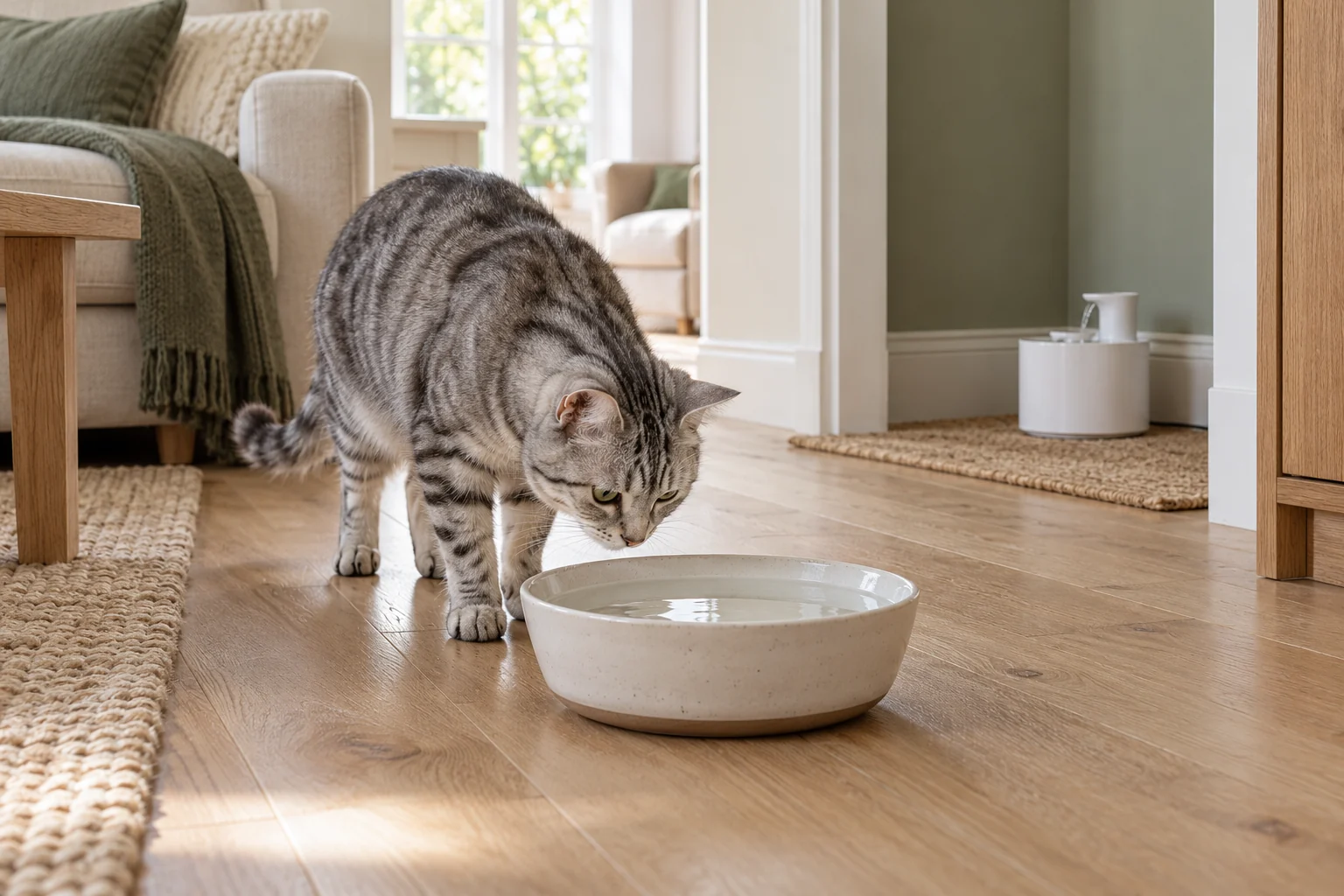
A clean water bowl is a straightforward starting point. A fountain adds moving water and a different drinking surface, which some cats may choose, but it also adds pump care, power and consumables. Offer a fountain alongside a familiar bowl rather than removing the cat’s established source. Placement, cleanliness and reliable access matter with either option.
A fountain can look like an obvious upgrade because the water moves and the product has more features. For the cat, the useful question is simpler: is this a comfortable, accessible place to drink? For the household, the second question is whether the cleaning and refill routine will be maintained.
This guide compares the everyday choice rather than ranking pumps or materials. For exact product shortlists, use cat water bowls and easy-clean fountains. You can offer both without deciding that one must replace the other.
Check location before changing equipment
A bowl beside food, litter or a busy doorway may be less appealing than the same bowl in a calm accessible place. Moving to a better location is a useful first step before assuming that still water is the problem.
Cats Protection’s drinking-water advice supports separating food, water and litter, and giving the cat a choice of approach and orientation. There is no single separation distance that works for every home. Look at usable distinct positions rather than a token gap between bowls on one mat.
Keep a clear route in and out. A station in a narrow corner can be difficult if another cat waits across the entrance. Our water-bowl placement guide covers walls, traffic and several cats in more detail.
What a bowl makes straightforward
A simple bowl has few parts and does not depend on a pump or electricity. You can see the water level and lift the whole item for washing. That can make a reliable daily routine easier, particularly when someone else is helping with care.
The shape still matters. Check rim height, usable width, stability and the way the cat positions their head. A wide shallow bowl is worth offering, but no single material or diameter suits every cat. A heavy ceramic bowl and a lightweight plastic one also behave differently when nudged.
Inspect the surface and base regularly. Chips, rough edges and damage are reasons to replace an item. Follow the exact washing instructions; dishwasher permission or microwave suitability should not be assumed from the material alone.
A shallow ceramic example
The Mason Cash grey saucer is a 13 cm, nominal 200 ml stoneware option. It illustrates a lower-profile drinking surface with simple washing access. The nominal capacity is not a promise that one filling will last a particular cat all day.
Ceramic saucer
Mason Cash Colour Mix cat saucer, grey
A 13 cm stoneware saucer with a listed 200 ml capacity. Choose the shallower profile if that suits the cat, while allowing for more frequent checks.
Check: Less listed capacity than the Cane bowl
View on Amazon ↗Check the actual water level and refill as needed. A smaller shallow bowl can be easy to approach but may need attention more often than a larger vessel. Place it on a stable surface without a curled mat creating another obstacle.
If the size or shape is unsuitable, compare the other bowl options rather than forcing the cat to accept this example. The goal is a comfortable drinking arrangement, not a particular ceramic design.
What a fountain adds
A fountain creates moving water and can offer a spout, flowing surface or collection area depending on the design. Some cats investigate that presentation readily; others prefer their familiar bowl. The response is individual.
A reservoir may hold more water than a small bowl, but it still needs checking. Water can fall below the pump’s operating level before every part appears empty. Do not use a quoted tank capacity as permission to leave the device unchecked for several days.
The equipment also adds a sound, a cable or charging routine, a filter arrangement and parts that may wear. Decide whether those tasks fit your household before choosing a more complex model. An appealing flow pattern has limited value if the pump is difficult to clean.
A standard fountain example
The standard white Catit PIXI provides a different drinking surface and a visible water-level window. It uses the PIXI filter family, which is separate from Flower and Mini Flower formats. Choose by the exact model and parts, not by the brand name alone.
Visible water level
Catit PIXI drinking fountain, white
The standard white PIXI fountain has an illuminated water-level window and uses the PIXI filter family. It is worth comparing if you want an easy visual reminder to check the water, alongside a routine for washing the reservoir and pump.
Check: Needs power, pump cleaning and replacement filters
View on Amazon ↗Read its manual for filling, cleaning and power arrangements. The fountain cleaning guide explains the separate bowl, filter and pump tasks, with a standard PIXI example. A new filter does not clean the rest of the fountain for you.
If buying replacements, use the Catit filter reference. A cartridge that can be pressed into a holder is not automatically the correct filter or a supported substitution.
Compare the upkeep honestly
| Everyday decision | Water bowl | Water fountain |
|---|---|---|
| Parts to clean | Usually a simple vessel and any mat | Reservoir, drinking parts, passages and serviceable pump parts |
| Power | None | Depends on the exact powered model |
| Consumables | Usually no dedicated filter | May need exact-model filters and replacement pump parts |
| Checking water | Visible level still needs attention | Reservoir and operating level both need attention |
| When removed for cleaning | Provide another fresh-water option | Provide a separate bowl while the unit is unavailable |
| Main choice for the cat | Shape, location and drinking posture | Shape, location, flow, sound and drinking posture |
This comparison concerns the routine, not a medical benefit. Neither category should be presented as preventing urinary or kidney disease simply because water is available through it.
Keep physical cleaning central
Wash the bowl according to its instructions and refresh the water. For a fountain, include hidden surfaces and the pump maintenance permitted by the manual. Do not judge cleanliness only by whether the water looks clear from across the room.
Match the schedule to the exact model and visible condition. Food debris, hair, residue or reduced flow may require attention sooner. A filter’s replacement interval and the bowl’s washing routine are separate tasks.
Keep cleaning tools suitable for food-contact equipment and rinse away residue. Do not add fragrances or cleaning chemicals to drinking water. If mineral deposits are difficult to remove, obtain the maker’s approved method for the particular part rather than using a universal descaling recipe.
Introduce a fountain as another option
Set it up in a suitable calm place while leaving the established bowl available. Let the cat investigate without carrying them to the spout or dipping their paws in the water. A sudden change in sound can take time to become familiar.
Avoid changing every factor simultaneously. If the only new station is in a different room with a different surface and no alternative, a refusal is hard to interpret. Compare comfortable locations and keep access reliable throughout.
Watch ordinary use discreetly. A curious sniff or paw touch is not the same as drinking, and choosing a fountain once does not mean the bowl has become redundant. Retain useful choices rather than making acceptance a training test.
Plan for a stopped pump or a busy day
Know what happens when the exact fountain loses power. Some designs leave a useful drinking pool; others offer much less access. Check the instructions and provide a separate bowl instead of relying on assumptions about the stopped unit.
When another person helps, show them the fill line, cleaning parts and location of supplies. A simple bowl may be easier for occasional carers, while a familiar fountain may be straightforward once demonstrated. Keep the arrangement easy to inspect.
In a shared home, provide drinking places that cannot all be blocked together. More equipment in one cramped corner does not create independent access. The location of each source matters as much as the count.
Choose the routine you can sustain
Start with a clean suitable bowl and a good position. Add a fountain if it provides a welcome alternative and you can maintain it. Keep both if the cat uses both and the household can care for them.
If drinking habits change noticeably, contact your vet. Use equipment to provide reliable access while you investigate, rather than treating a product purchase as an explanation or treatment. Consistent fresh water and a manageable routine remain the practical priorities.
If you choose moving water, introduce the fountain gradually. Compare steel and ceramic designs separately from the decision to use a fountain at all.
Frequently asked questions
Does every cat need a water fountain?
No. Cats need reliable access to fresh water, but a fountain is one way to provide it rather than a universal requirement. A suitable clean bowl may be used comfortably. Consider a fountain when it adds a useful choice and you can maintain the exact model properly.
Will a fountain definitely make my cat drink more?
No individual increase is guaranteed. The cat may prefer the bowl, the fountain or different locations at different times. Observe voluntary use while retaining a familiar source. A marked change in drinking needs veterinary advice rather than assuming a new product is the explanation.
Is fountain water automatically cleaner than bowl water?
No. Flow and a filter do not replace washing the reservoir, drinking surface and serviceable pump parts. A neglected fountain can have hidden residue. A bowl also needs regular cleaning and fresh water, with chipped or damaged surfaces replaced.
Can I remove the bowl once the fountain is running?
Keep a separate clean bowl available, especially during introduction, cleaning or any power or pump problem. Check whether water remains accessible when the exact fountain stops; designs differ. Multiple usable drinking locations can also reduce reliance on a single station.
Which is easier for an older cat?
Compare the actual drinking height, rim, approach and floor grip rather than the product category. Some cats may prefer one surface or posture. If bending, stepping or drinking behaviour changes, discuss it with your vet and provide an easy familiar option while you assess the equipment.