
Practical guide · Water fountains & bowls
Where to put a cat water bowl
Choose a calm, accessible drinking place away from food and litter. Plan clear approaches, separate options and an easy daily refill routine.
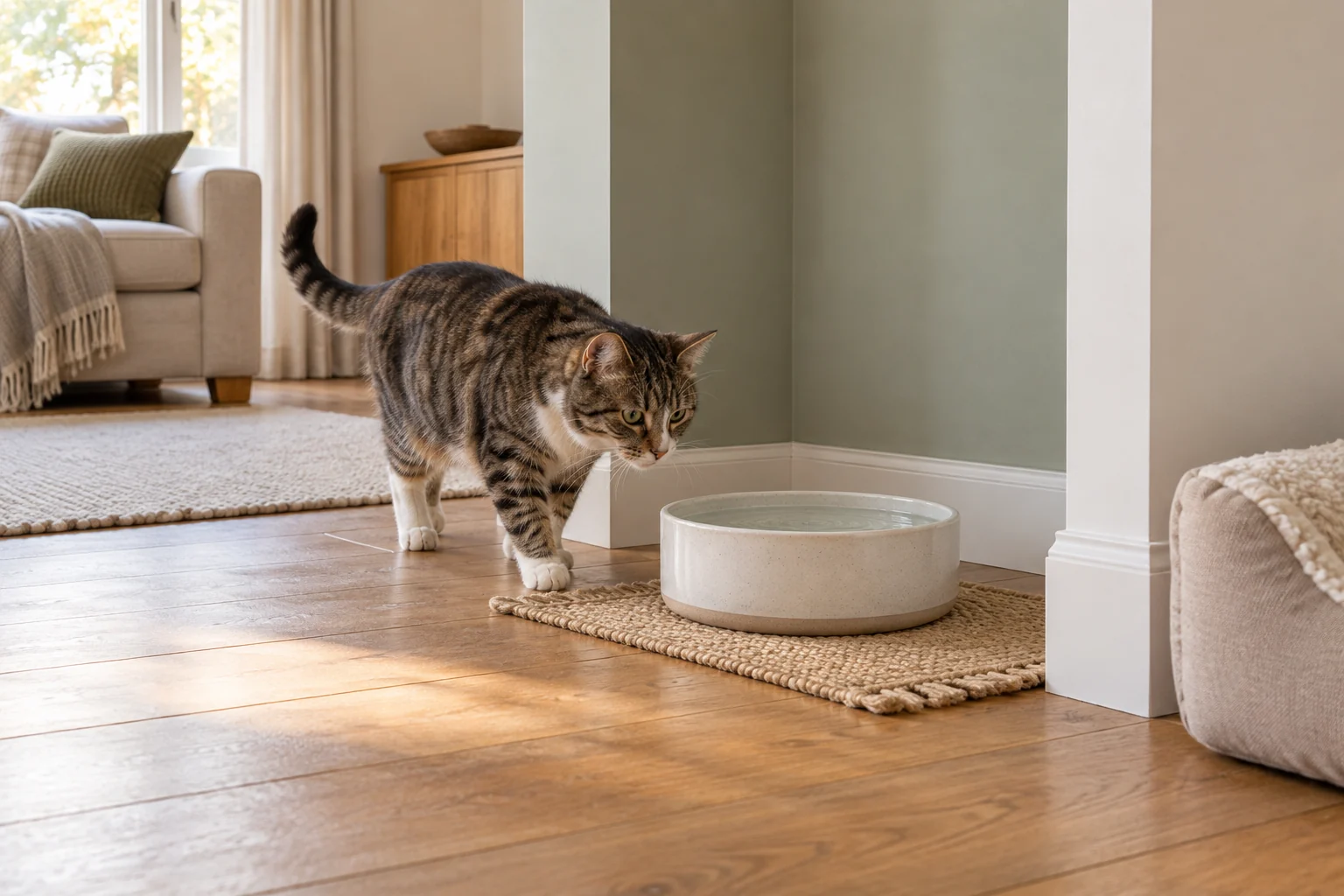
The short answer
A separate drinking choice with a clear approach
Choose a calm, accessible drinking place away from food and litter, with space for the cat to approach and face the room if it prefers. Avoid a busy doorway or a route another pet can block. Keep a familiar option available while offering a separate new location, and choose somewhere you can refill and clean easily.
Choose a drinking place your cat can use calmly
The best place for a cat water bowl is a separate, accessible drinking location that remains practical when the home is busy. It should give the cat room to approach and leave while letting you notice the water level and lift the bowl for cleaning.
A spot that looks convenient beside the food bowl may not offer the choice the cat needs. Likewise, a quiet corner can become awkward if it has only one narrow approach or sits behind a door. Evaluate the whole setting, not just the patch of floor occupied by the dish.
Cats Protection's drinking-water guidance advises offering water away from food and litter, with calm access and a choice of orientation. The room examples below apply those principles without pretending there is one correct distance or floor plan for every home.
Separate water from food and litter
Start by looking for a usable location away from the feeding and toileting areas. Separate bowls allow more flexibility than a combined food-and-water stand. If you already use a combined unit, an additional drinking station elsewhere can offer a new choice without abruptly removing the familiar setup.
In a small home, separate does not have to mean inaccessible or hidden. Compare a different part of the room or another suitable room the cat regularly uses. Avoid moving water into a little-used cupboard solely to make the dining area look tidy.
Keep the water station out of the litter area, including the space where litter is carried or cleaning equipment is stored. A bowl on a shelf immediately above a tray is still part of that toileting corner. Think about the complete use of the area rather than only whether the two objects touch.
Offer room to face different directions
A cat drinking with its head lowered may prefer a view of the room. Leaving space between the bowl and wall can offer another approach, provided the bowl remains stable and does not become a trip hazard. Some cats will still choose to face the wall, and that choice does not mean the arrangement has failed.
Observe the ordinary standing position without trying to rotate or reposition the cat. Does it approach from the same direction, stand partly on a mat edge or squeeze between furniture? Those details can reveal a more useful small change than buying a different bowl immediately.
Do not place a bowl in the centre of a busy route simply to make every side accessible. A calm position with adequate usable space is the priority. There is no need to maximise empty floor around it at the cost of exposing the cat to constant footsteps.
Check the location at busy times
Visit the spot while breakfast is being prepared, a washing machine is running or people are arriving home. Doors, chair legs, shopping bags and a person's feet can occupy space that appears clear in a quiet-room photograph.
Avoid a bowl immediately behind a frequently opening door or beside an appliance that suddenly starts. A location near a cat flap or a busy glass doorway can also have more activity than it first appears. Choose a position that remains reasonably predictable throughout the day.
Keep the cat's ordinary route in mind. An older cat or one with particular movement needs may not benefit from having its only water source moved upstairs. Individual veterinary advice about comfort and access should guide any change; a location article cannot prescribe one height or route for every cat.
Two bowls that illustrate different placement needs
Wide and shallow
Beco Steady cat bowl, olive green
A wide, shallow recycled-plastic dish with a grippy base and an easy-grip handle. Useful where a lower rim matters more than a deep reservoir.
Check: Inspect plastic for scratches and wear
View on Amazon ↗The Beco Steady cat bowl has a broad, low 17 × 17 × 3 cm outer shape and a grippy base. It is a useful example for a floor station where a lower rim and an easy lifting handle matter. Check that the whole bowl sits flat on the chosen surface rather than relying on the non-slip description alone.
Its shallow form needs an attentive refill routine. A low dish positioned somewhere you regularly pass can be easier to keep useful than a larger one hidden behind furniture. Keep the station calm for the cat while still making it observable to you.
Ceramic bowl
Mason Cash Cane cat bowl, 13 cm
A straightforward stoneware water bowl with a listed 400 ml capacity. Its deeper shape offers a different refill routine from a shallow saucer.
Check: Listed capacity is not a fill-to-rim target
View on Amazon ↗The Mason Cash Cane cat bowl is a deeper ceramic example with a listed 13 cm diameter and 400 ml capacity. It changes the bowl shape and material, not the principle of a separate drinking location. Check the rim for damage and leave a secure place for lifting and replacing it.
These are optional examples, not a requirement to buy new equipment before changing the layout. Our water-bowl buying guide compares the shapes in more detail. An existing suitable clean bowl can be used to offer a separate location.
In a kitchen: plan around work rather than empty corners
Look for a calm edge of the room away from food preparation, opening appliances and the main path between worktop and table. Leave enough room to lift the dish without pulling out a bin or moving the cat's food. Check that a dishwasher door or cupboard does not sweep over it.
Avoid positioning the bowl where cooking splashes, dropped scraps or cleaning products are likely to reach it. A small flat washable mat may help manage ordinary drips, but it should not form a raised or slippery boundary around the dish.
If no floor spot remains calm at busy times, consider another familiar room. A kitchen is convenient for refilling, but convenience is only useful when the cat can also reach and use the station comfortably.
In a living room or small flat: use a separate familiar zone
A quiet side of a living room can offer a drinking choice without requiring another dedicated cat room. Check the sofa's footprint when people are seated, including an extended footrest. Keep water clear of sockets, trailing leads and items that can fall into the dish.
An alcove can work if the cat has a usable approach and the bowl is not pushed into the narrowest part. Compare what happens if it is brought slightly forward or placed along a more open edge. Do not wedge the bowl into a recess merely because its diameter fits.
In a studio, separate the functions within the available space. Food, water and litter do not have to form one compact cluster. A modest rearrangement of everyday furniture may create a more useful drinking zone than adding another combined feeding unit.
Multiple cats and multiple floors
Provide genuinely separate useful drinking choices, rather than only increasing the number of bowls in one location. A group of dishes touching in a corner can still be controlled through one approach. Watch whether a cat waits nearby or turns away when another pet is present.
Use places the cats already visit, and consider access between floors where relevant. A bowl downstairs does not provide the same immediate choice to a cat spending most of its time in a separate upstairs area. Keep the arrangement appropriate to the household rather than following a rigid decorative layout.
Do not assume that cats drinking from the same bowl proves there is no access issue. Observe the times and routes as well as a successful drink. Separate options can remain useful even when one station seems popular.
Make refilling and cleaning part of the choice
A water station needs routine attention. Choose somewhere you can lift the bowl easily, provide fresh water and clean the dish and surrounding floor. A heavy ceramic bowl carried through several obstacles can make a theoretically good location impractical.
Check under mats and around edges for trapped moisture or debris. Keep the mat flat and dry, and inspect the bowl for damage or wear. Follow the permitted cleaning directions for the actual material instead of assuming every dish is dishwasher safe.
The printed capacity is not a daily drinking prescription or a promise about the time between checks. Keep suitable water available and respond to the actual working level. If the household changes, reconsider whether the number and positions of drinking options still make sense.
Change the arrangement without removing every choice
Offer the new location while keeping a suitable familiar source available where practical. Keep the bowl or other features consistent enough that you can interpret the change. Replacing the dish, water source, height and room at once makes it difficult to see what mattered.
Do not force the cat to drink or repeatedly place it beside a new bowl. Allow voluntary use and keep normal access to fresh water. A change in drinking habits or thirst should be discussed with a vet; layout changes cannot establish the medical reason.
Five checks for a water-bowl location
0 of 5 checks complete
Sources and scope
Cats Protection supports the separation, calm access and orientation principles. The selected Amazon UK brand information supplies the example bowls' dimensions and material details. Room layouts remain individual; this guide does not promise a particular increase in drinking or replace advice about a change in thirst.
If you are considering moving water as well, compare fountains and bowls, then use the fountain introduction guide while retaining a familiar drinking choice.
Frequently asked questions
How far should the water bowl be from the food bowl?
There is no universal distance that makes every layout suitable. Offer drinking water in a separate usable location away from food and litter, following welfare guidance. A second bowl across a room can provide a clearer choice than moving it a few centimetres along the same cramped feeding stand.
Should the bowl touch a wall?
Consider leaving space for different approaches and orientations. A cat may prefer to face the room while drinking, but individuals vary. Pulling the bowl forward can offer that choice if it remains out of the walking route. Watch what the cat chooses rather than forcing a particular position.
Can the water bowl go in the kitchen?
Yes, if there is a calm accessible spot separate from food and litter. Check noise, opening appliances, cooking activity and footsteps at busy times. A kitchen location that works in an empty room may become awkward during ordinary household routines.
Where should water go in a multi-cat home?
Offer separate suitable drinking locations with clear approaches. Several bowls touching in one corner may still depend on the same route or be blocked by another cat. Observe access and provide choices in places the cats actually use.
Should I move the bowl if my cat suddenly drinks differently?
You can consider the location, but a new change in thirst or drinking behaviour needs veterinary advice. Do not assume the bowl position explains it. Keep fresh water available and avoid repeatedly changing every part of the setup while trying to diagnose the cause yourself.