
Practical guide · Scratching posts & pads
When to replace a scratching post
Separate normal surface wear from loose joints, exposed fittings and structural damage. Decide whether a post needs monitoring, a supported spare or full replacement.
The short answer
Judge the structure as well as the scratching surface
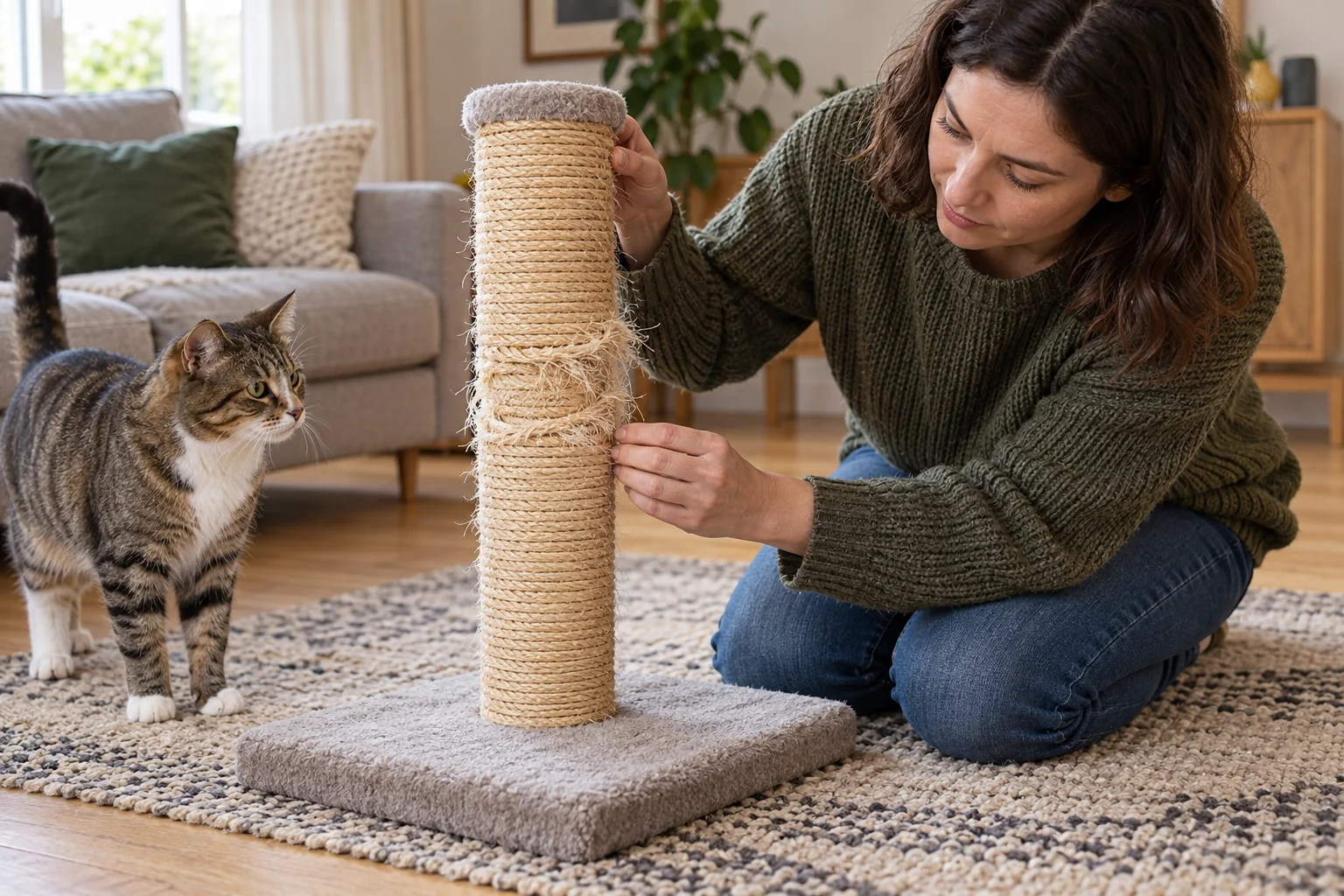
Replace or remove a scratching post when the base, core or connections are damaged, fittings are exposed, or the surface no longer offers usable scratching without loose hazardous material. Light fuzz alone does not set a replacement deadline. An exact supported replacement column may be enough for a sound modular tree; otherwise replace the complete unit and keep another suitable scratching option available.
A well-used scratching post is supposed to show evidence of scratching. Replacing every slightly fuzzy surface wastes useful equipment, while waiting until a post collapses leaves the decision far too late. The useful distinction is between surface wear and damage to the parts that support or contain it.
Start with the whole item, then inspect the scratching surface. A tree can have beautiful new rope and a failing joint underneath. Conversely, a familiar post with superficial wear can remain useful when its base, core and fittings are sound.
Separate ordinary wear from a stopping point
Look at where the cat scratches most. A slightly rougher patch, compressed fibres or small amounts of loose cardboard dust may simply show that the surface is doing its job. Clean loose debris as the maker allows, then inspect what remains beneath it.
Long loops, hanging strips, a surface pulling away in sheets or a hard exposed core need closer attention. Check whether claws could snag and whether the cat chews loose material. Do not leave a damaged item available just because it remains a favourite.
A visual check is not a guarantee of structural safety. If the column sounds different, rocks at the joint or moves under an ordinary light inspection, stop use and find the cause before inviting the cat back.
Inspect the base and connections first
Move the cat to another resting or scratching option. Examine the base from above and below, where the instructions allow access. Look for cracking, swelling, separation around fasteners and a support panel that no longer sits flat.
Inspect each connection without forcing it. A loose fastener may have a manufacturer-specified tightening procedure, but repeated loosening can also indicate damaged threads or compressed board. Tightening harder is not a universal repair and can make a damaged joint worse.
For a multi-level tree, check all supported platforms, restraints and intermediate columns. Wear on one lower post can affect a larger structure above it. The cat-tree stability checklist separates floor contact, assembly and structural concerns.
Read wear according to the material
Rope-covered columns can develop frayed strands or loosened coils. Woven panels can separate from their backing. Cardboard pads gradually lose usable corrugated structure. Plush-covered supports can hide damage to the board or tube underneath.
Inspect the ends of a column as well as the middle. A top cap or fitting may become exposed before the main scratching patch looks exhausted. For pads, check the underside and frame, particularly if dampness or cleaning has affected the material.
Keep the distinction between sisal and cardboard scratching surfaces practical. Neither material has a single lifespan that applies across every construction, household and scratching pattern.
Choose monitoring, a spare or a complete replacement
| Observation | Next step | Reason |
|---|---|---|
| Light surface fuzz; structure sound | Clean as instructed and monitor | Appearance alone does not set a deadline |
| Loose loops or peeling covering | Remove from use while assessing | Loose material may snag or be chewed |
| Wobble at a joint | Check exact assembly guidance | The cause may be deeper than a loose screw |
| Cracked, swollen or crumbling base/core | Stop use; seek supported replacement | New covering cannot restore damaged structure |
| One worn modular column; sound tree | Identify the exact approved spare | A whole new tree may be unnecessary |
| Unknown model or uncertain connections | Ask the maker or replace appropriately | Similar dimensions do not establish compatibility |
Avoid making a damaged post available as a test for the cat. A person should resolve the equipment question before normal use resumes.
A complete upright replacement: SmartCat Ultimate
Upright scratching
SmartCat Ultimate scratching post, grey
A tall, straightforward post with a woven sisal surface and a broad square base. It is a useful option for a cat that chooses upright scratching and needs room to stretch, without adding a whole climbing tower.
Check: Needs assembly and a flat, steady position
View on Amazon ↗The SmartCat is a complete freestanding post with a broad square base and woven scratching surface. Compare its usable height and floor outline with the cat’s established full stretch, rather than buying only by the overall photograph.
It is an example of replacing a complete worn upright item, not a source of a generic screw-in column for a different tree. A square woven tower and a cylindrical rope-covered spare are different constructions even when both serve scratching.
Follow Cats Protection’s scratching advice when planning the replacement: stable support, an appropriate scratching direction and a useful position all matter. A new post hidden in an unused room may leave the original habit without a workable outlet.
An exact column example: TRIXIE 44012
Match the exact part
TRIXIE 44012 replacement post, 9 × 50 cm
A 50 cm replacement column with a 9 cm diameter and M8 fittings. TRIXIE identifies model 44012 as jute; it is not the separate 43992 sisal version with similar dimensions.
Check: M8 does not establish universal compatibility
View on Amazon ↗TRIXIE identifies 44012 as a 9 cm diameter, 50 cm long jute-covered post with an M8 connection. Those details describe that component; they do not prove it fits the SmartCat above or every TRIXIE tree.
Keep the tree’s model, revision and assembly diagram beside your measurements. Confirm the column’s position, end arrangement and supplied fittings before ordering. The replacement scratching-post reference explains why even two M8 posts may serve different arrangements.
If the matching part is unavailable, ask the maker whether there is an approved alternative. Do not shorten a column, enlarge a fixing hole or create a different load path to make a similar spare fit.
Know what a surface repair cannot do
Adding rope or fabric may hide a cracked core without restoring it. Tape around a split base does not recreate the original support. Unknown glues, exposed staples and protruding screws can introduce new problems while making the outside look tidier.
Use only a maker-supported repair for the actual component, with materials appropriate for the intended use. Where that support is absent, choose a correctly matched replacement part or a complete sound item instead of an improvised structural fix.
Keep the receipt and model information for the new equipment. An assembly diagram stored with the part list makes the next replacement decision easier, especially where several near-identical columns occur on one tree.
Keep the scratching habit during the change
Offer the new surface beside the established scratching location, with a stable base and room to approach. Let the cat investigate and use it voluntarily. Do not place their paws on it or punish use of another surface.
If the old item is still sound enough for supervised continued use, an overlap can preserve a familiar option while the replacement becomes useful. Remove unsafe equipment immediately rather than keeping it for scent. A separate cardboard pad or sound post can bridge the gap.
Keep the orientation similar when that is what the cat chooses. An older cat that no longer stretches comfortably upwards may need an accessible horizontal option and veterinary attention for a change in movement, rather than simply a taller new post.
Make the replacement decision methodically
Scratching-post condition checklist
0 of 5 checks complete.
For the new position, use where to put a scratching post. Inspect the replacement again after assembly and during normal cleaning; buying a new item starts a new care routine rather than ending the need to look at it.
Frequently asked questions
Is a frayed scratching post always unsafe?
Light surface fuzz can be normal wear. Inspect more closely for long loose loops, peeling layers, exposed fastenings, crumbling core material and instability. The whole structure matters. Remove an item from use if damage makes it unsafe or you cannot establish that its connections remain sound.
How often should I replace a scratching post?
Use condition and use rather than a fixed six- or twelve-month rule. A heavily used post in a multi-cat home may wear differently from a second occasional option. Check when cleaning, after a move or impact, and whenever the sound, movement or scratching behaviour changes.
Can I replace just the rope?
Only use a repair method supported for the exact item and compatible with its structure. New rope does not fix a cracked core, weakened attachment or damaged base. Avoid exposed staples, unknown adhesives and improvised structural repairs; an exact replacement component is often the clearer option.
Can I fit a generic M8 post to any cat tree?
No. Matching a thread label is only one check. Length, diameter, thread depth, end fittings, load path and the manufacturer’s approved arrangement also matter. The TRIXIE 44012 example is a particular jute/M8 column; it is not a universal spare for every TRIXIE or other-brand tree.
Why does my cat prefer the old scratcher?
Position, scent, surface and familiar use can all matter. Keep a worn but sound item during a gradual transition if it remains safe, placing the replacement beside the established scratching spot. A damaged item should come out of use immediately, with another suitable scratching surface offered.