
Buying guide · Litter & cleaning
Best easy-clean litter mats and scoops
Compare a textured mat, an opening honeycomb mat and a metal scoop by emptying, washing, litter size and tray access. Build a routine that is easy to keep.
The short answer
Make emptying and cleaning easy to repeat
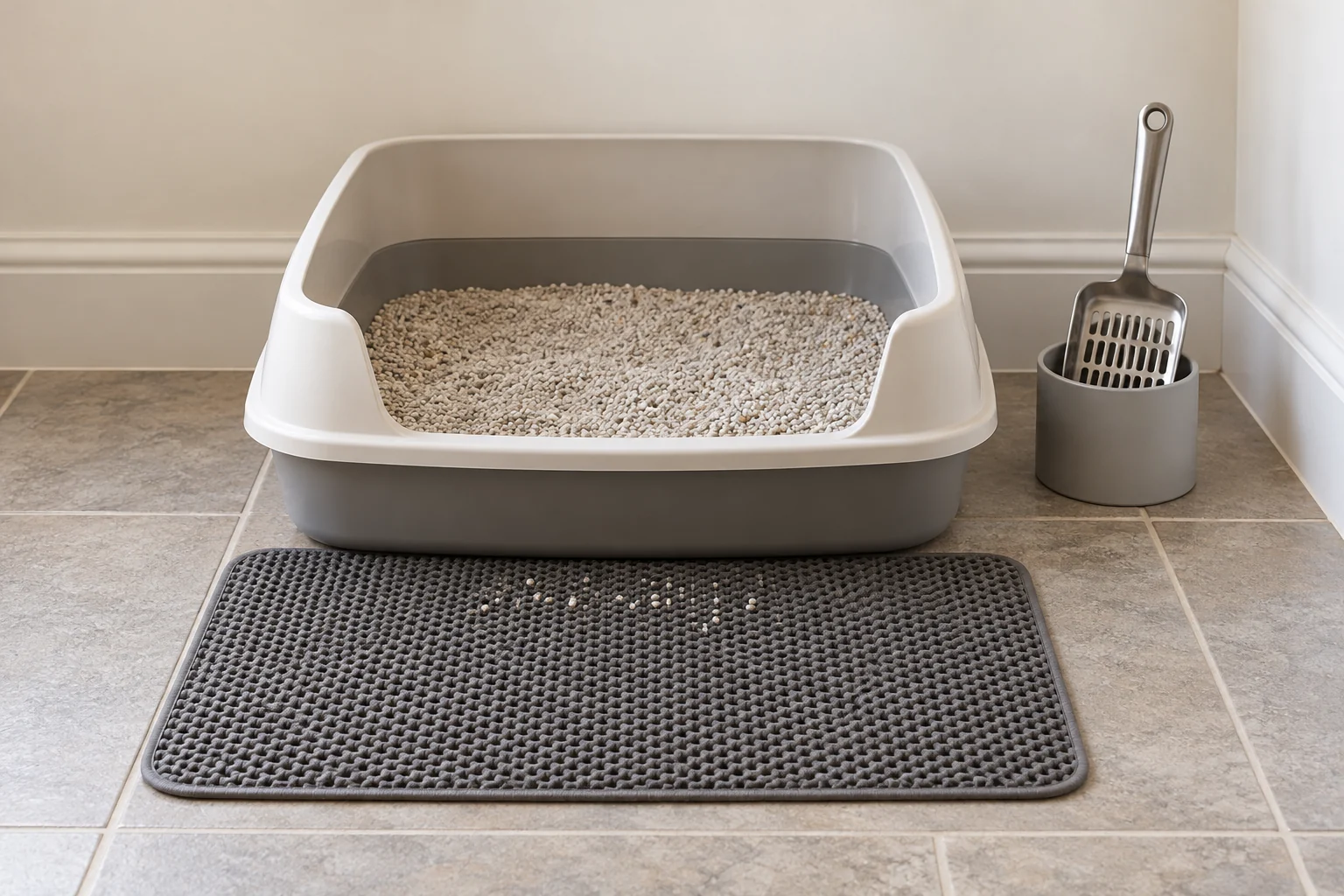
Choose a mat you can lift, empty, wash and dry without making the tray harder to reach, then choose a scoop whose slots suit your litter. The Catit textured mat and Pieviev honeycomb mat offer different emptying arrangements; the WePet aluminium scoop serves the separate job of lifting clumps. None replaces a roomy tray, suitable litter or regular cleaning.
Compare the options
| Option | Selected format | Useful for | Main check |
|---|---|---|---|
| Catit large grey mat | 60 × 90 cm textured mat | A broad separate surface beside the tray | Lift, clean the pattern and inspect underneath |
| Pieviev grey honeycomb | 76 × 61 cm, two layers | Opening a collecting layer to empty litter | Dry both layers and the floor |
| WePet small blue scoop | 28 × 10.8 × 4.7 cm, aluminium head | Lifting clumps from compatible litter | Slots, tray corners and gentle use |
The easiest accessory to clean is one that suits your actual litter, tray and available washing space. A large mat with inaccessible pockets can create more work than the scatter it catches. A sturdy scoop can still be frustrating if all the clean pellets remain in its head.
This selection covers three distinct jobs: a broad textured walking surface, a mat that opens to release trapped litter, and a rigid scoop for clump removal. Choose the pieces that solve your routine rather than buying every accessory together.
Start with the tray and the cat’s approach
Measure the clear floor in front of the tray and the route around it. The mat should lie flat without covering the entrance, curling into a trip edge or forcing the cat through a narrow channel. Keep enough room for you to remove the tray for cleaning.
Cats Protection’s toileting guidance prioritises suitable tray size, quiet access and appropriate locations. A mat is a finishing accessory. It should not be used to justify a smaller tray or an enclosed position that is difficult to reach.
If the cat avoids a new texture, remove it and observe the response. Do not trap them on the mat or make every exit cross a surface they dislike. A bare easy-clean floor can be a better arrangement than an accessory that disrupts toileting.
A broad textured mat: Catit large grey
Catit litter mat, large grey
Best for: Catching some litter beside a tray
A 60 × 90 cm textured mat to place beside the tray, with enough area to cover part of the route out. It is a finishing accessory once the tray and its position work, rather than a reason to compromise access.
What stands out
- Generous area beside the tray
- Can be lifted separately for cleaning
Keep in mind
- Needs space without obstructing the approach
- Will not catch every piece of litter
- 60 × 90 cm
- Grey textured surface
- Separate tray accessory
The selected Catit mat is 60 × 90 cm, so plan for a substantial rectangle rather than a small doormat. It can cover part of the route out of a tray while remaining separate enough to lift and clean.
A textured surface needs inspection within the pattern as well as a quick wipe across the top. Empty loose dry litter carefully, then follow the supplied washing directions when there is dirt or soiling. Check the underside and floor before replacing it.
This format suits owners who want one broad mat without an opening lower pocket. The trade-off is that material can remain within the texture. It will not catch every granule, and the cat’s normal route may bypass it entirely.
A mat that opens for emptying: Pieviev honeycomb
Pieviev honeycomb litter mat, 76 × 61 cm grey
Best for: Opening both layers to empty trapped litter
A two-layer EVA mat that catches loose litter through its honeycomb upper surface. It opens for emptying and washing, with both layers needing inspection and complete drying before it returns beside the tray.
What stands out
- Debris can collect below the walking surface
- Opens to access the lower layer
Keep in mind
- Requires space for a broad flat approach
- Check below the mat; it does not replace tray cleaning
- Listed 76 × 61 cm
- Two-layer honeycomb EVA
- Grey selected size
The selected grey Pieviev mat measures 76 × 61 cm and uses a two-layer EVA design. Granules can pass through the honeycomb upper layer to a lower collecting layer, which you open when emptying.
That collection space is the main reason to choose it over a simple textured mat. Check how easily the opening works in your washing area and whether you can see and reach the corners. Lift it steadily rather than shaking trapped litter across the floor on the way to the bin.
The listing describes water washing. Keep the cleaning method within the actual care instructions: washable EVA is not automatically suitable for a washing machine, tumble dryer, radiator or steam cleaner. Both layers and the floor beneath should be clean and fully dry before use.
Inspect below the mat after any accident. Do not rely on a “waterproof” description as a reason to leave contamination against flooring, and do not assume a mat can contain every spill at its edges.
A rigid clump-lifting tool: WePet aluminium scoop
WePet aluminium litter scoop, small blue handle
Best for: A rigid scoop for everyday clump removal
A cast aluminium scoop with a deep sifting head and a blue grip. Match the slots to your litter and use the edge gently so the tool does not gouge a plastic tray or break reusable clean pellets unnecessarily.
What stands out
- Rigid head for lifting clumps
- Deep sifting area
Keep in mind
- Slot size must suit the litter
- Hand-clean and dry; avoid scraping the tray hard
- Listed 28 × 10.8 × 4.7 cm
- Cast aluminium alloy head
- Small, blue-handle version
The small blue-handle WePet scoop has a listed 28 × 10.8 × 4.7 cm outline and a cast aluminium head. Its deeper sifting area can hold a clump while loose suitable litter falls through.
Check the head against the tray’s corners and entry slope. A broad rigid tool may leave narrow curved areas awkward to reach. Use a gentle lifting motion, avoiding pressure that gouges the tray or breaks clumps unnecessarily.
The selected listing says to clean after use and keep it dry. It does not establish dishwasher permission for every component. Pay attention to the junction between head and grip, and store the scoop separately from food-preparation utensils and household brushes.
Match the scoop slots to the litter
Small slots retain finer pieces, while wider slots let larger clean granules pass. That is a practical fit question rather than a rule that one metal scoop is superior for every litter. Check the litter maker’s instructions, particularly for non-clumping and pellet systems.
Lift clumps as the litter instructions allow and let clean suitable granules sift back without vigorous shaking. If a scoop retains most clean litter, the slot format may be wrong. If waste breaks into small pieces that pass through, review the litter routine and handling rather than simply buying a wider scoop.
Avoid using a scoop to force apart deposits stuck to the tray. Empty and clean the tray by its supported method when needed. Scratched plastic can be harder to keep clean, so protecting the surface is part of choosing and using the tool.
Separate emptying, washing and drying
Empty loose litter over an appropriate container before bringing a mat to the washing area. Inspect the collected material rather than automatically tipping everything back into the tray. Contaminated or damp granules should be discarded appropriately.
Wash soiled surfaces using the product’s permitted method, removing residue and checking folds, pockets and grip seams. Keep litter equipment away from food-contact items and clean the washing area afterwards. Wash your hands after handling litter and waste.
Dry both the accessory and the floor beneath it. A mat that looks dry on top may still hold moisture below. Avoid rolling it up damp or returning it to the floor with wet corners hidden beneath a tray.
Store the scoop so the handle stays usable
Use a dedicated washable holder or another suitable separate storage arrangement. The scoop head should not rest against the part of the handle you grab, or drip onto a walking route. A holder needs its own inspection and cleaning; it is not a way to hide a dirty tool.
Keep the scoop accessible enough that daily waste removal remains straightforward. In a small home, plan where it goes before buying a long handle. A tool stored in a food cupboard or balanced across the tray edge creates avoidable problems.
Compare the work each accessory creates
| Accessory | Routine job | Hidden cleaning check |
|---|---|---|
| Textured mat | Lift and empty dry granules | Debris within the pattern and underside |
| Two-layer honeycomb mat | Open and empty the collecting layer | Wet corners, both layers and floor below |
| Metal scoop | Lift waste and sift compatible litter | Slot edges, grip junction and tray scratches |
| Scoop holder | Keep the tool in a separate place | Collected dirt and moisture inside |
Choose around the task you can keep doing consistently. A product that is awkward to empty, rinse or dry in your home may be less useful than a simpler arrangement.
Know when to change the setup
Replace a mat with damaged edges, deep splits or persistent contamination that its permitted cleaning method cannot resolve. Check a scoop for rough damage, a loose grip or deformation. Do not keep a failing accessory merely because the main tray remains sound.
If scatter suddenly increases, look at tray access, litter choice and the cat’s behaviour as well as the mat. New toileting difficulty or accidents need veterinary attention. For the room arrangement, use litter trays in a small home; for adequate floor room, start with litter-tray sizing.
For waste after scooping, compare litter disposal bins by the refill system, filling access and emptying routine.
Frequently asked questions
Do I need both a litter mat and a scoop?
They do different jobs. A scoop removes waste and clumps from suitable litter; a mat may catch some granules carried out on paws. Start with the tray and cleaning routine. Add a mat only if its texture and position do not make the cat avoid the tray or interrupt access.
Can I return litter caught in the mat to the tray?
Only consider returning clean dry granules that have not been contaminated, and follow the litter guidance. Discard litter mixed with urine, faecal debris or cleaning liquid. Keeping a few granules is less important than maintaining a hygienic tray and surrounding floor.
Are honeycomb mats machine washable?
Not simply because they are washable. The Pieviev listing describes water washing and emptying its two-layer design; it does not establish a general machine-wash setting. Follow the exact supplied care directions, clean both layers and dry fully without adding unsupported heat.
Is a metal scoop safe for a plastic tray?
A rigid metal scoop can work well when used gently, but its edge can scratch or gouge plastic if used as a scraper. Match the head to the tray corners, lift rather than force stuck material, and use the tray maker’s cleaning method when deposits need removal.
Why does clean litter fall out with the waste?
The scoop slots may be too fine for the litter size, or clumps may be breaking during handling. Match the sifter to the litter format and follow the litter instructions for use. A single scoop cannot be assumed suitable for fine clumping litter, large pellets and every other format.