
Practical guide · Cat beds & resting
How to wash a cat bed
Read the care label, separate cover and filling instructions, remove hair and dry the bed fully. Includes a specific Scruffs example and a practical wash checklist.
The short answer
Follow the exact label, then dry every layer
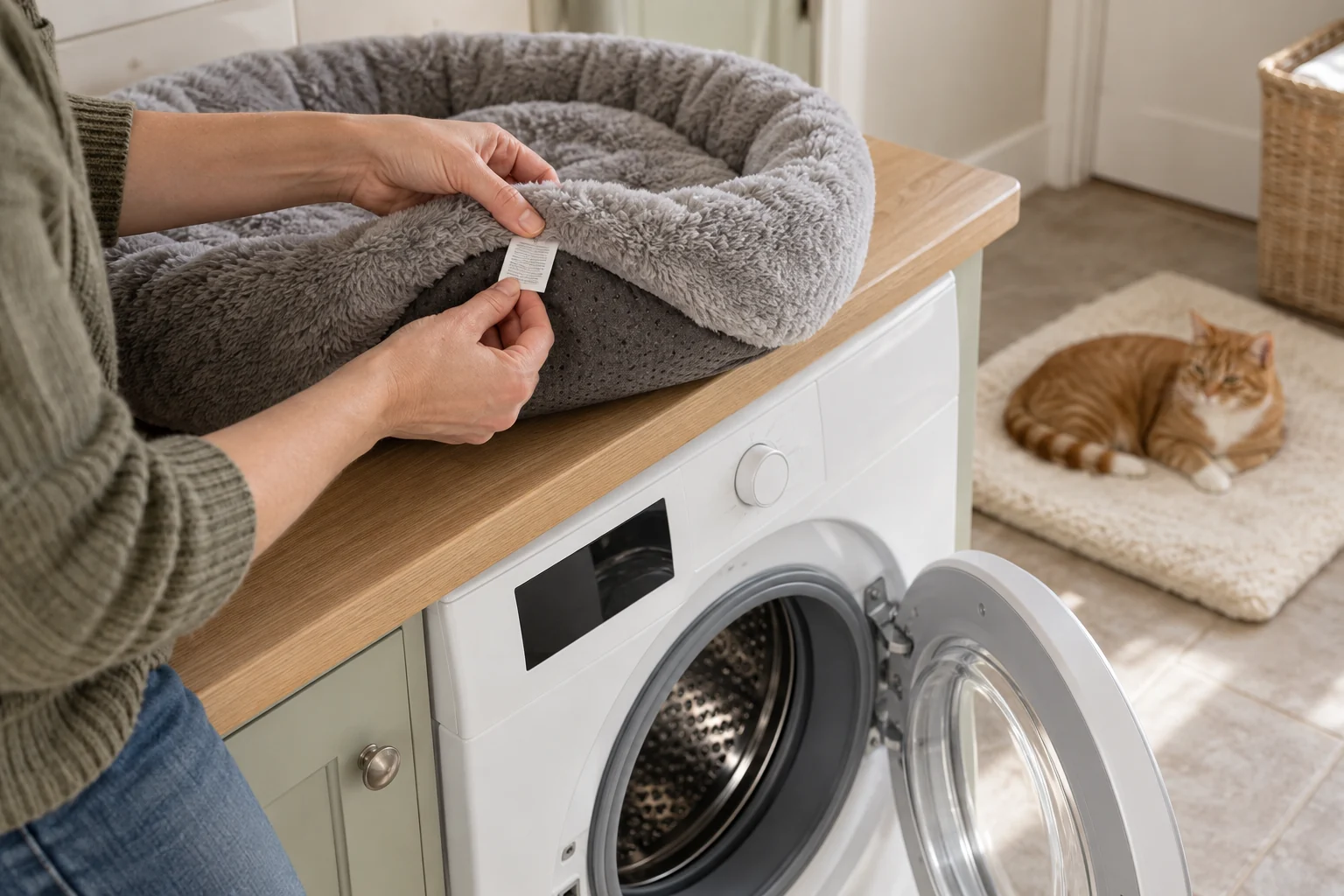
Read the exact care label before washing. Check whether permission covers the whole bed, only a cover or a removable cushion, then remove loose hair and wash by the specified method. Rinse appropriately and let all layers dry fully before use. Keep another familiar resting place available, and do not assume every bed tolerates the same temperature or tumble-drying programme.
“Washable” can mean several different things on pet bedding. Sometimes the whole bed is washable; sometimes only the zipped cover or one cushion is. The most useful first step is identifying exactly what you own, before the item becomes wet and difficult to separate.
This guide covers routine washing and drying. If bedding has been exposed to a diagnosed infection, parasites or significant contamination, ask your veterinary team what cleaning process is needed and check that the bed can tolerate it. Do not turn a general laundry routine into an unverified disinfection method.
Read the label on every component
Look under the bed, inside a cover opening and on removable cushions. Record the instructions for washing, drying, bleaching and any restrictions. A label on the cover does not automatically apply to the foam, filling or non-slip base beneath it.
Identify whether the whole bed is one piece, whether the cover separates fully and whether a cushion contains a removable insert. Photograph the labels before they fade. Keep a model name or product code with the notes so future care is based on the exact item.
If a label conflicts with a broad product description, ask the maker for clarification before washing. Avoid copying a temperature from a similar-looking bed or another size in a different range. Appearance and fabric colour are weak evidence for a care method.
Prepare the bed before adding water
Move the cat to a different available resting place and remove loose hair by a method suitable for the fabric. Shake debris into an appropriate bin or use a suitable vacuum attachment gently, without pulling at seams or surface loops.
Remove any solid soiling carefully and follow the item’s instructions for stains. Check seams, zips and the base for damage. Washing can worsen a split seam or release filling into the machine, so resolve damage before starting.
Keep non-washable inserts separate and dry. Do not assume that a decorative zip means the whole inner pad can be removed or washed. Open the product only as its design allows, without cutting covers or disturbing structural parts.
Check the machine and programme
Use the programme, temperature and cleaning products permitted for the bed. The item needs suitable drum space to move and rinse; a large soft bed squeezed tightly into a small machine is not a practical interpretation of “machine washable”.
Check your appliance’s own capacity and restrictions too. A bulky bed can become substantially heavier when wet. If it does not fit appropriately, use a suitable larger facility or another maker-approved method rather than forcing the door closed.
Avoid adding an extra-hot stage, bleach or a high-speed setting simply because the bed looks dirty. Those changes can affect backing, filling and shape. Seek specific advice where ordinary washing cannot address the contamination safely.
A whole-bed washable example: Scruffs Chester
Scruffs specifies that the Chester box bed can be washed as a whole at 30°C, with no bleach or tumble drying. Its manufacturer care information also notes that larger sizes may require a larger drum.
Whole-bed washing
Scruffs Chester box bed, small chocolate
A one-piece small pet bed that the maker permits to be machine-washed as a whole at 30°C. It offers a conventional soft-sided resting space without having to remove a separate cover.
Check: Bolsters reduce the usable sleeping space
View on Amazon ↗The linked small bed has a 50 × 40 cm outside footprint, including its sides. It is an example of a defined care arrangement, not a recommendation to replace a suitable bed before washing. Confirm the supplied label and the size your cat needs.
One-piece construction makes the washing scope clearer, but it can increase the amount that must dry together. Plan another resting option before starting, especially in a small home without much drying space.
A flat fleece with its own label: Vetbed Original
Vetbed Original offers a different format from a deep bolstered bed. The linked piece is approximately 102 × 76 cm and has the Original green backing. It is not the separate Non-Slip version, and its care instructions should not be borrowed from another Vetbed range.
Flat washable fleece
Petlife Vetbed Original, grey 40 × 30 in
A flat washable fleece with the Original green backing. The selected listing is a generous 40 × 30 inch piece, useful when you want a continuous resting surface rather than a bed with raised sides.
Check: Original backing is not the Non-Slip range
View on Amazon ↗Use the label on the actual supplied piece for the permitted temperature and drying method. Published descriptions can vary across versions, so this guide does not assign one universal wash temperature to every fleece or backing.
A spare flat resting surface can be useful during laundry, provided it sits securely. Plan floor grip separately for Original and do not fold it into an unstable pile on a narrow chair or shelf.
Treat covers and filling as separate care tasks
If only the cover is washable, remove it as instructed and protect the insert from moisture. Check whether the insert permits spot cleaning, airing or another specified method. Do not soak foam or stuffing simply because the cover washes well.
Keep each cover with its correct insert. A replacement cover that is too tight can compress the filling, while a loose one can bunch at the entrance. Confirm sizes and fastenings rather than relying on a similar colour or a generic “medium” label.
If the filling is heavily soiled and cannot be cleaned by a supported method, ask the maker whether a replacement insert is available. A clean outer cover does not resolve contamination within an unsuitable inner pad.
Separate the decisions before washing
| Part or question | What to establish | What not to assume |
|---|---|---|
| Removable cover | Its own wash and drying label | The inner pad uses the same method |
| One-piece bed | Permission applies to the whole item | Any drum can take it safely |
| Foam or filling | Exact cleaning and drying instructions | Fabric appearance means it can be soaked |
| Non-slip backing | Permitted temperature and drying | Heat cannot affect grip or shape |
| Hygiene concern | Product-compatible veterinary advice where needed | A hotter wash guarantees a particular clinical result |
Keep those answers with the bed’s model information. The same checklist helps when choosing future washable cat beds.
Dry the whole bed fully
Use the permitted drying method in a clean, ventilated place away from direct heat that could damage the item. Reshape only as the instructions allow. Do not balance a heavy wet bed on an unsuitable heater or block a vent.
Check thick seams, bolsters and the middle of the filling. A dry-feeling surface can hide dampness deeper inside. Leave adequate time before the cat uses it or before storing it in a closed cupboard.
After drying, inspect for bunched filling, a distorted base, open seams or loose trim. Make sure the entrance and resting surface still work normally. A bed that has changed shape significantly may need replacing or advice from the maker.
Keep a familiar resting choice available
Wash bedding in rotation rather than removing every familiar resting place together. Cats Protection’s sleeping-place advice recommends retaining a bed with the cat’s familiar scent while others are cleaned.
Put the clean dry bed back in a suitable quiet place and allow voluntary use. A different laundry scent or changed position can affect the response. The bed-placement guide helps if the cat starts choosing the floor beside it.
Do not leave soiled bedding in use solely to preserve scent. Provide a suitable clean alternative and deal with the soiling. If accidents or grooming changes are new, speak with your vet alongside reviewing the bed and access.
Finish with a practical check
Cat bed washing checklist
0 of 5 checks complete.
A manageable washing and drying routine is part of a good bed choice. Keep the label and instructions so future cleaning starts with the same clear information.
Frequently asked questions
Can every cat bed go in the washing machine?
No. A washable cover may surround a filling or base that must not be machine washed. Check the label on each component and the maker’s current instructions. If the label is missing, identify the exact bed before choosing a programme rather than treating its fabric appearance as permission.
What temperature should I use for a cat bed?
Use the temperature specified for the exact item and component. The Scruffs Chester box-bed example here is specified for whole-bed washing at 30°C, but that is not a rule for other beds. Do not increase the temperature to solve a hygiene concern without appropriate product and veterinary advice.
Can I tumble dry the bed?
Only if the care label permits it, using its stated setting. Scruffs says not to tumble dry the Chester example in this guide. Thick filling can remain damp after the surface feels dry, so allow adequate drying time and check the whole item before returning it.
How often should I wash my cat’s bed?
Use visible dirt, odour, the cat’s use and the care instructions rather than a universal calendar. Wash promptly after soiling and obtain veterinary advice for infection or parasite concerns. Rotate bedding so the cat still has a clean usable resting place and some familiar scent.
Should I add fabric conditioner or a strong scent?
Do not add products simply to perfume the bed. Follow the label and choose cleaning products appropriate for the item, rinsed thoroughly. Cats rely on scent, and a strong new laundry smell may be less inviting than a properly cleaned, fully dry bed without added fragrance.